
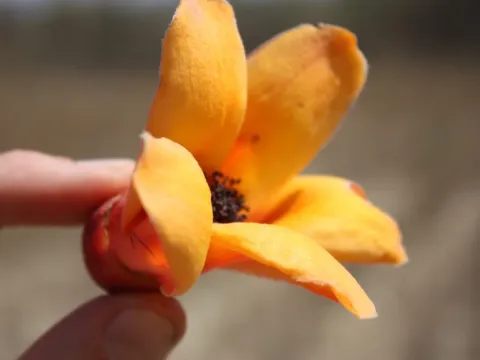
Bombax costatum
Bombax costatum
Sowing of Bombax costatum seeds is typically performed at the onset of the rainy season to ensure sufficient soil moisture for successful germination. No complex scarification is required, although soaking seeds in warm water for a few hours can speed up the emergence of seedlings.
What the section contains
Bombax costatum
For nursery production, a loose substrate mixed with sand is recommended to prevent waterlogging. Seeds should be planted at a depth of 1–2 cm, maintaining an ambient temperature of +25...+30°C to facilitate optimal growth.
Seedlings should be transplanted to their permanent location once they reach a height of 30–50 cm and have developed a robust root system. A spacing of at least 5–8 meters between trees is necessary to allow for proper canopy development.
Young plants require shading from direct midday sun during their first few years to prevent heat stress. Gradual exposure to open conditions helps harden the tree and prepares it for survival in harsh savanna environments.
The best planting sites are those with well-drained soil that does not experience prolonged flooding. Bombax costatum is sensitive to waterlogged roots during its early stages of growth.
Bombax costatum belongs to the Malvaceae family and is a native species of the tropical African savanna. It is well-adapted to regions that experience a distinct alternation between wet and dry seasons.
The tree shows high drought tolerance, often shedding its leaves during the dry season to conserve water. It thrives on various soil types, including rocky or nutrient-poor substrates, making it a hardy species.
Full sun exposure is crucial for the healthy development of this tree, as it has low shade tolerance. Being a tropical species, it cannot survive frost or prolonged exposure to significantly cold temperatures.
Mature trees reach heights of 10–15 meters. Rapid growth is observed during the early years if the plant is protected from intense competition with surrounding weeds and shrubs.
The species requires minimal agricultural maintenance, though regular weeding around the base of the tree during the first few years significantly accelerates development and ensures better survival rates.
The economic value of this culture lies in its fruits, which contain seeds rich in oil and proteins. Yield potential depends heavily on the tree's age and the moisture availability during the growing season.
The flowers of Bombax costatum are a critical nectar source for bees and other pollinators, playing a vital role in local ecosystem services and apiculture during the dry season.
The fruits consist of capsules containing both fiber and seeds. While the fiber is similar to cotton, it is primarily used in small-scale local crafts for stuffing mattresses or pillows.
Young leaves and flower calyces are frequently consumed by local populations as a vegetable, highlighting the importance of the species in agroforestry and food security systems.
The wood is lightweight and low in density, which limits its use in major construction but makes it a popular choice for carving, small crafts, and domestic household items.
The primary threats to young trees include grazing by livestock and wild herbivores, which often strip the fresh leaves. Protective fencing is essential during the first 3–4 years to ensure the plant's survival.
Insect pests, particularly various types of caterpillars that feed on foliage, can cause damage if populations surge. Regular monitoring of the canopy is recommended to mitigate potential infestations.
Fungal diseases can affect the root system if the trees are planted in heavy, poorly drained clay soils where water tends to accumulate. Proper site selection is the best preventative measure.
Competition from aggressive native grasses and weeds can significantly stunt the growth of young trees. Regular weeding of the planting area is a fundamental agricultural practice for this species.
Mechanical damage to the trunk can create entry points for pathogens and infections. Care should be taken when performing maintenance work around the trees to avoid scarring the bark.
Fruit harvesting is performed manually once the capsules begin to crack, signaling that the seeds inside are fully mature. Quick collection is necessary to prevent seed loss on the ground.
Collected capsules are dried in the sun for several days, which facilitates the separation of seeds from the internal fiber. This traditional method ensures the longevity of the harvested material.
For culinary purposes, flower calyces are gathered before the buds fully open. They can be consumed fresh immediately after harvest or dried to preserve them for future use.
Leaf harvesting should be done cautiously to ensure the tree remains vigorous. It is recommended to remove no more than 20–30% of the total canopy foliage at any given time.
Seeds are stored in well-ventilated containers made of natural fabrics to allow airflow. Under proper conditions, the viability of the seeds can be maintained until the following planting season.