
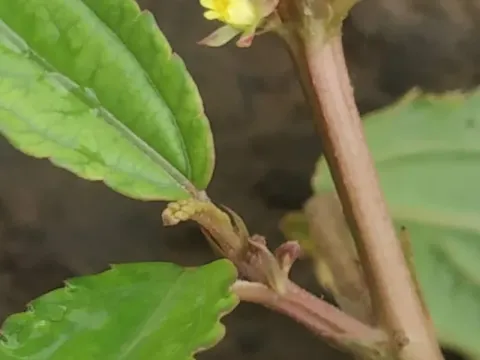
Corchorus fascicularis
Corchorus fascicularis
Corchorus fascicularis is a warm-season crop that requires high soil temperatures to ensure successful germination and vigorous early growth.
What the section contains
Corchorus fascicularis
Sowing should be scheduled during the period of stable warmth, ideally when temperatures remain consistently above 25°C to avoid cold-induced growth suppression.
Seeds are sown at shallow depths to ensure uniform emergence, typically spacing plants to encourage the development of single, long stems suitable for fiber.
The optimal plant density is critical for suppressing weeds and promoting high-quality stems that are devoid of excessive branching or lateral growth.
In many regions, sowing is timed to coincide with the beginning of the rainy season to capitalize on natural precipitation for early plant development.
This member of the Malvaceae family thrives in fertile, well-draining soils that are rich in organic matter and retain sufficient moisture for active growth.
Corchorus fascicularis is highly sensitive to light levels and requires full sun exposure to maximize photosynthetic efficiency and fiber yield.
Regular fertilization, particularly with nitrogen, is necessary to support the rapid biomass production characteristic of this industrial plant.
The species exhibits a strong affinity for warm and humid climates, making it well-suited for cultivation in tropical and subtropical environmental zones.
Adequate water management is essential; while the plant can withstand brief periods of waterlogging, prolonged dry spells significantly decrease its vegetative quality.
The yield of Corchorus fascicularis is highly dependent on environmental conditions, soil fertility, and the strict management of planting density during the season.
By implementing optimal irrigation and nutrient management, producers can achieve high biomass outputs per hectare, crucial for sustainable fiber production.
Yield metrics are also influenced by the harvest timing, as earlier or later cutting changes the percentage and quality of the extracted fiber per plant unit.
Consistent agricultural practices, such as effective weed control, allow the plants to allocate resources primarily to stalk elongation rather than competitive growth.
Under favorable conditions, the plant displays a rapid growth rate, allowing for a concentrated harvest cycle that contributes to the economic viability of the crop.
The crop is susceptible to several leaf-feeding insects, including various lepidopteran larvae, which can strip the canopy and inhibit biomass accumulation.
Soil-borne fungal pathogens may affect the root system, particularly in poorly drained soils or during extended periods of cool, wet weather conditions.
Aphids and whiteflies can infest the younger tissues, causing stunted development and potentially acting as vectors for various plant viral diseases.
Integrated pest management strategies are recommended, focusing on crop rotation and the early identification of pest pressures to minimize chemical interventions.
Maintaining field hygiene by removing crop residues after harvest is a vital practice to reduce the overwintering potential of common pests and diseases.
Harvesting is typically performed during the peak flowering stage to ensure the optimal balance between biomass volume and the quality of the raw fibers.
The stems are cut near the base and bundled for the traditional retting process, which is necessary to loosen the fibers from the non-fibrous plant tissues.
Precise timing is essential; delaying the harvest beyond the flower maturity stage results in a coarser fiber, reducing its value for textile processing.
After the retting process is complete, the fiber is washed and dried to remove residues, ensuring it meets standards for industrial or commercial use.
Proper drying is critical to prevent mold growth, which can irreversibly damage the fibers if stored under high-humidity conditions without adequate preparation.