
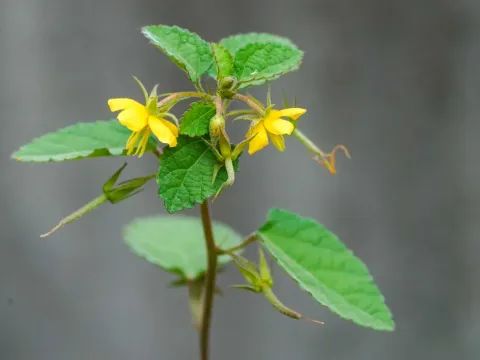
Corchoropsis
Corchoropsis
Corchoropsis, a member of the Malvaceae family, is an annual herb typically cultivated as a potential fiber crop. Sowing is best performed in spring once the soil temperature consistently reaches 15–18 degrees Celsius, ensuring optimal conditions for germination.
What the section contains

Corchoropsis
The seeds should be planted at a shallow depth of 1–2 centimeters, requiring firm soil contact to ensure proper moisture absorption. A row spacing of 30–40 centimeters is recommended to allow for adequate sunlight penetration and airflow between the plants.
Maintaining consistent soil moisture during the first two weeks post-sowing is critical for achieving a uniform stand. In temperate regions, sowing should be scheduled for late May to minimize the risks posed by unexpected late spring frosts.
Plant density is a key determinant of fiber quality. Targeted density is usually around 500,000 to 600,000 plants per hectare, which encourages the development of long, straight stems and minimizes undesirable lateral branching.
Pre-sowing seedbed preparation is vital to control initial weed emergence. Since the growth of Corchoropsis is relatively slow in the early stages, keeping the field free of competing vegetation is essential for a healthy crop establishment.
This crop thrives in light sandy loam or loamy soils that possess a neutral to slightly acidic pH. Good soil drainage is crucial, as the root system is highly sensitive to waterlogging and subsequent oxygen depletion.
Originating from East Asia, Corchoropsis is a heat-loving plant. It requires a cumulative active temperature of approximately 2200–2500 degrees Celsius throughout the growing season to reach full maturity and maximize biomass production.
High levels of solar radiation are necessary for biomass accumulation. Shaded conditions negatively impact the physiological development of the plant, resulting in reduced fiber yield and inferior physical properties of the harvested material.
Water requirements are significant during the peak stem-growth phase. Irrigation or consistent rainfall is needed to prevent early woodiness, which can permanently compromise the tensile strength of the extracted plant fibers.
While nitrogen fertilizers are beneficial for promoting rapid stem development, excessive application must be avoided. A balanced approach with phosphorus and potassium is advised to ensure both high biomass and fiber durability.
The primary threats to Corchoropsis include fungal root diseases, which often develop due to poor crop rotation or excessive soil moisture. Proper field hygiene and rotation cycles are the most effective management strategies.
Pests, particularly leaf-eating insects and aphids, pose a significant threat during the vegetative stage. They can physically damage foliage and serve as vectors for viral infections that lead to stunted growth.
Weed management is largely restricted to mechanical cultivation, as the crop is sensitive to various chemical herbicides. Early manual or mechanical weeding is essential to prevent significant yield losses from competition.
Overcrowded plantings can create a microclimate with high humidity, which increases the susceptibility of the crop to various pathogens. Maintaining recommended plant spacing is a proactive measure against these outbreaks.
Regular field scouting is necessary to identify early signs of infestation or disease. Early detection allows for targeted interventions, helping to maintain the health and productivity of the crop throughout the season.
Harvesting is performed at the onset of mass flowering, which represents the stage of technical maturity. At this time, the stem has attained maximum length, and the fiber quality is at its peak for industrial processing.
Once harvested, the stems are dried in the field before undergoing retting. Retting is a biological process that uses water to loosen the fibers from the woody core of the plant, requiring precise temperature control.
Avoiding over-ripeness is critical; if the plant transitions fully to the seed-setting stage, the fibers become coarse and brittle. This significantly lowers the economic value of the harvested raw material.
Harvesting machinery should be calibrated to ensure a low cutting height, maximizing the fiber-bearing length of the stem. The quality of the final product depends heavily on the efficiency of the cleaning process following retting.
After extraction, the fibers are cleaned, combed, and baled for transport to processing facilities. They are then utilized in the production of natural textiles, high-strength twine, and various industrial cordage products.