
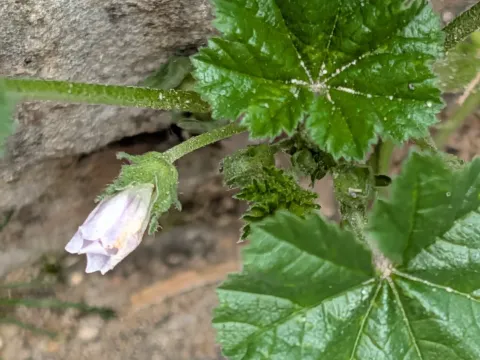
Common mallow
Malva neglecta
Common mallow is typically an annual or biennial plant that exhibits an extended germination period, often emerging throughout the entire growing season.
What the section contains
Common mallow
Seed germination begins early in the spring as soon as soil temperatures reach approximately 6 to 10 degrees Celsius in the top layer.
Seeds are capable of germinating from depths of up to 4 centimeters, allowing the plant to establish itself successfully even after field cultivation.
The plant produces a significant amount of seeds that remain viable in the soil seed bank for several years, ensuring persistent re-infestation.
Once established, the plant quickly develops a prostrate or ascending growth habit, forming a dense canopy that shades the surrounding soil.
As a member of the Malvaceae family, Malva neglecta is highly adaptable to various environmental conditions and soil types across many regions.
It prefers fertile, nutrient-rich soils with good moisture levels, which is why it is frequently found in vegetable gardens and well-fertilized crop fields.
The plant thrives in full sunlight, though it possesses enough plasticity to tolerate partial shade if necessary during its early developmental stages.
Its deep taproot system provides excellent drought resistance, allowing it to survive in compacted soils where other weeds might struggle.
Common mallow performs best in neutral to slightly alkaline pH environments but can maintain growth across a broad spectrum of soil acidity levels.
In agricultural settings, common mallow acts as a competitive weed that depletes moisture and soil nutrients otherwise intended for the primary crop.
The plant is highly susceptible to hollyhock rust (Puccinia malvacearum), a fungal disease that causes chlorotic spots and premature leaf death.
Various insect pests, such as weevils, often feed on the foliage and seeds of the mallow, sometimes causing significant damage to the plant's reproductive output.
It can serve as a reservoir for certain plant viruses, which may then be transmitted by vectors to nearby sensitive crop species like tomatoes or beans.
Integrated weed management, including mechanical hoeing and the strategic use of herbicides, is essential to keep populations below economic thresholds.