
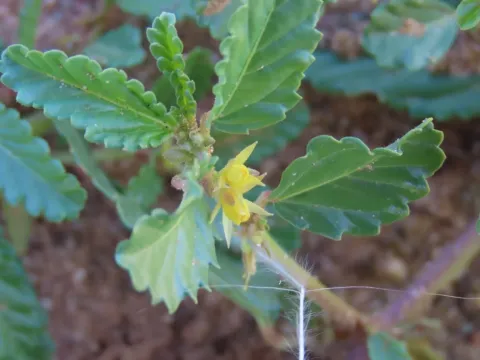
Corchorus schimperi
Corchorus schimperi
Corchorus schimperi is a heat-loving crop, so sowing is conducted exclusively after the soil temperature at seed depth has warmed up to +18…+20°C.
What the section contains
Corchorus schimperi
Optimal sowing dates fall within the period of stable warming, when the risk of late frosts that could damage young seedlings in the cotyledon phase has passed.
The sowing technology involves using a row-based method with row spacing that ensures optimal plant density to produce high-quality fibers.
Before sowing, it is recommended to subject seeds to pre-sowing preparation, which promotes uniform emergence and increases germination energy in field conditions.
Under irrigated farming conditions, sowing dates may be adjusted depending on the irrigation water supply schedule and specific soil-climatic micro-district characteristics.
This crop belongs to the Malvaceae family and has high temperature requirements, preferring a hot climate with high light intensity.
For normal growth and development, the plant requires fertile loamy or sandy soils with a neutral reaction, rich in organic matter.
Corchorus schimperi is sensitive to waterlogging, therefore, sites with high groundwater tables or heavy, poorly drained soils are unsuitable for cultivation.
The crop is highly responsive to nitrogen fertilizer application, which stimulates intensive vegetative growth and contributes to the formation of high-quality stems.
The plant demonstrates relative resistance to short-term dry periods; however, regular moisture during the active biomass accumulation phase is required for marketable yield.
Key threats to the harvest include fungal root system diseases that occur due to crop rotation violations or excessive soil moisture at the beginning of the season.
Pests, such as leaf-eating insects and specific aphid species, can cause significant damage to crops, reducing overall productivity and fiber quality.
Prevention of phytosanitary risks includes strict adherence to spatial isolation, the use of high-quality treated seed material, and regular field monitoring.
Weed control during the early development period is a critically important step, as slow seedling growth makes the crop uncompetitive in the initial stages.
An integrated plant protection system involves using biological preparations combined with agrotechnical practices to minimize pesticide load on the crops.
Harvesting is conducted during the technical maturity phase, which occurs when plants reach maximum stem height before active tissue lignification begins.
Delaying the harvest leads to a decrease in fiber flexibility and strength, which significantly devalues the final product and complicates processing stages.
The harvesting method includes mowing the stems with specialized harvesters, followed by bundling them for retting or industrial fiber processing.
In modern farms, mechanized harvesting methods are applied, allowing for a significant reduction in field work time while maintaining raw material quality.
After mowing, the stems undergo a retting process, the purpose of which is to separate bast fibers from the woody part of the stem to obtain high-quality textile raw materials.