
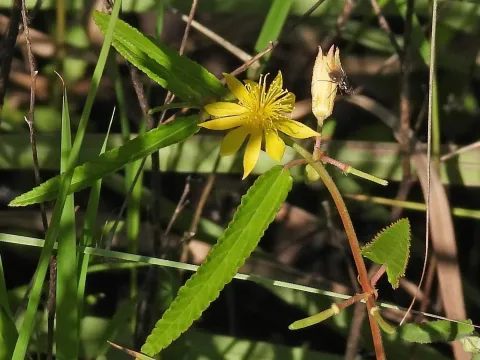
Corchorus orinocensis
Corchorus orinocensis
Corchorus orinocensis is a heat-loving annual plant belonging to the Malvaceae family, cultivated primarily for its strong bast fiber. Sowing should only occur once soil temperatures consistently reach 15-18°C, as the plant is highly sensitive to cold weather and frost during the germination stage.
What the section contains
Corchorus orinocensis
Seeds are sown at a shallow depth of 1-2 centimeters, ensuring optimal contact with moisture to facilitate quick emergence. In commercial farming, narrow row spacing is preferred to encourage rapid upward growth and prevent lateral branching, which could degrade the quality of the fiber.
Proper field preparation is essential, as the soil must be fine-tilled and free from weed debris to allow the delicate root system to establish effectively. Preventing soil crusting after irrigation or rain is a critical management task to ensure an even plant stand across the field.
Density management is vital, as excessive space between plants leads to thicker, woodier stems that are more difficult to process. Maintaining high plant populations per square meter is a standard practice to maximize the length and uniformity of the fibers produced by this crop.
The timing of sowing must align with the onset of the growing season's humidity, as the crop requires consistent water availability from the moment of germination. Using high-quality, treated seeds helps reduce early-season mortality and ensures a vigorous initial growth phase.
##requirements##This crop thrives in warm climates, requiring temperatures between 25-35°C for optimal development. Exposure to temperatures below 15°C significantly inhibits metabolic activity and stunts plant height, which is the primary factor in determining fiber yield.
Adequate water supply is crucial; the plant requires consistent moisture throughout its growth cycle, often necessitating supplemental irrigation in regions with erratic rainfall. However, soil drainage must be excellent to prevent the development of root-related diseases caused by waterlogging.
Deep, fertile loamy or alluvial soils with a neutral to slightly acidic pH are ideal for high-productivity cultivation. Regular application of organic matter or balanced fertilizers, particularly those rich in nitrogen, supports rapid biomass accumulation and fiber strength.
Corchorus orinocensis is sensitive to day length, which influences the transition from vegetative growth to the flowering stage. Farmers must ensure that the cultivar choice matches the photoperiod of the growing region to prevent premature flowering, which reduces fiber yield.
Environmental conditions play a decisive role in the final fiber quality, as extreme heat accompanied by moisture stress can cause the stems to harden prematurely. Providing a stable growing environment ensures the flexibility and elasticity required for industrial applications.
##yield##The primary economic output is the dry bast fiber, which is extracted after harvesting and retting the stems. Yield efficiency is determined by the total biomass produced and the percentage of fiber content recovered during the processing phase.
Harvesting at the correct phenological stage, typically around the flowering initiation, is essential for obtaining high-quality fiber. Harvesting too late results in coarse, brittle fiber that lacks the commercial value required for high-end textile or cordage products.
Productivity can be significantly improved by implementing integrated crop management practices, including precise weed control and nutrient scheduling. Modern selection methods continue to focus on increasing fiber percentage while maintaining plant height and uniformity.
The post-harvest process, including retting in water tanks or controlled moisture environments, is a critical step that dictates the final fiber quality. Efficiency in this manual or mechanical process can greatly influence the economic returns of the farming operation.
Average yield figures depend heavily on soil fertility and irrigation consistency throughout the growing season. With optimized conditions, Corchorus orinocensis can provide significant yields of high-quality fiber, making it a valuable asset for local agricultural economies.
##threats##Fungal infections, particularly those affecting the roots, represent the most significant threat to plant health in humid conditions. Poor drainage or water stagnation provides the ideal environment for these pathogens to cause wilting and plant mortality.
Pests, such as various lepidopteran larvae, can cause severe defoliation, which severely hampers the photosynthetic capacity of the plant. Monitoring and early intervention are necessary to prevent population outbreaks that could devastate the crop during the active growth phase.
Bacterial spots on stems and leaves can appear under suboptimal weather conditions, potentially reducing the visual appeal and physical integrity of the fiber. Adherence to a strict crop rotation schedule helps reduce the buildup of soil-borne diseases.
Weed competition during the first 30 days is a primary yield-limiting factor, as weeds compete for nutrients and light. Mechanical inter-row cultivation is an effective method for managing weeds without relying solely on chemical herbicide applications.
Abiotic stressors, such as unexpected temperature drops or prolonged drought, can leave the plants vulnerable to secondary infections. Maintaining plant vigor through optimal nutrition and water management remains the best defense against both biotic and abiotic threats.