
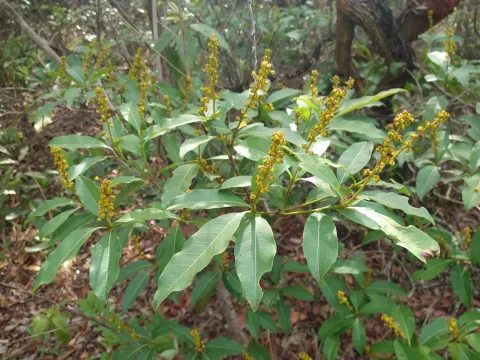
Byrsonima intermedia
Byrsonima intermedia
The propagation of Byrsonima intermedia is primarily achieved through seeds. Because seeds have short-term viability, planting should occur immediately after the fruit is harvested to ensure the best germination rates.
What the section contains
Byrsonima intermedia
Pre-treatment of the seeds, such as scarifying the hard endocarp, can help improve the speed and uniformity of germination. Planting usually aligns with the onset of the rainy season to provide natural irrigation.
In nursery settings, seeds are planted in individual containers with a well-draining, slightly acidic substrate. This mirrors the natural soil conditions of the Brazilian Cerrado, where the plant thrives.
Seedlings are ready for transplanting when they reach a height of approximately 30 to 40 centimeters. It is crucial to handle the root ball with care to minimize transplant shock and encourage rapid establishment.
Proper spacing is essential for orchard layout, with recommended distances of 5 to 6 meters between trees. This ensures that every plant receives sufficient light to sustain its broad canopy.
Byrsonima intermedia, commonly known as Murici, is a hardy plant native to tropical savannas. It is exceptionally well-adapted to regions with distinct dry and wet seasons, making it a resilient agricultural choice.
Sunlight is the most critical environmental requirement. The tree requires full sun exposure to maintain vigorous vegetative growth and to produce high-quality, sugar-rich fruit.
The plant is highly tolerant of poor, acidic soils, including those with high levels of aluminum. However, effective soil drainage is non-negotiable, as waterlogged conditions quickly lead to root rot.
The species exhibits impressive drought resistance, allowing it to survive periods of limited rainfall that would devastate more sensitive crops. This makes it an ideal candidate for low-input farming systems.
Optimal temperatures for development range from 22 to 28 degrees Celsius. While it can handle heat well, the species is sensitive to frost and is strictly confined to tropical and subtropical climates.
Byrsonima intermedia generally begins to produce a commercial harvest within 3 to 5 years after planting. Yields tend to increase as the tree matures and the canopy expands.
An average mature tree can yield between 10 and 25 kilograms of fruit per season. Actual output is heavily influenced by the amount of rainfall during the flowering period and local pollinator activity.
The fruit is highly prized for its unique, buttery texture and intense aroma. It is widely used in the food industry to produce ice creams, juices, jellies, and traditional regional spirits.
Reliable fruit set depends on the presence of native bees, which perform cross-pollination. Protecting these pollinators is an essential component of the farm's management strategy.
The economic potential of Murici is growing as global interest in exotic, nutrient-dense fruits increases. It serves as an important source of income for smallholder farmers in South America.
Fungal infections, particularly anthracnose, represent the primary threat to Murici plantations, especially in high-humidity climates. These pathogens attack leaves, branches, and ripening fruit.
Insect pests such as scale insects and mealybugs can cause significant damage by feeding on the tree's sap, which weakens the plant and stunts overall fruit development.
Sanitation practices, including the regular pruning of diseased wood, are vital for maintaining tree health. Pruning also helps improve air circulation, which significantly reduces the risk of fungal proliferation.
Fruit flies often target ripening Murici, laying eggs inside the fruit and causing premature decay. Integrated pest management, including the use of pheromone traps, is highly recommended.
Regular monitoring of the orchard is necessary for early detection of pest outbreaks. Maintaining optimal nutrient levels in the soil helps trees develop stronger immune responses against these threats.
The harvesting process for Byrsonima intermedia is typically staggered over several months, as the fruits do not ripen simultaneously on the tree. This requires multiple passes through the orchard.
Fruits are ready to harvest when their skin turns a vibrant yellow or orange color. Harvesting should be done daily or every other day to collect fruit at the peak of ripeness before it drops.
Manual harvesting is the standard method, as it is the only way to ensure the delicate fruits are not bruised. Careless handling can rapidly lead to fermentation and spoilage.
Once harvested, the fruit must be cleaned and sorted immediately. Fresh market fruit is often packed in small, ventilated containers to prevent damage during transportation to retail locations.
Given the fruit's perishable nature, storage in a temperature-controlled environment is necessary to maintain quality. Proper handling after harvest significantly increases the shelf life for distribution.