
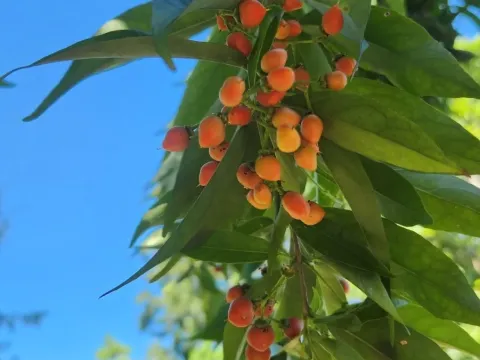
Bunchosia
Bunchosia
Bunchosia is a genus of flowering plants in the Malpighiaceae family. Native to tropical regions of the Americas, these trees are valued for their sweet, dense fruits often compared to peanut butter.
What the section contains


Bunchosia
This crop requires a tropical or subtropical climate. It is highly sensitive to frost and thrives in temperatures between 20°C and 30°C, requiring protection in cooler latitudes.
The ideal soil for Bunchosia is fertile, well-draining, and slightly acidic. It adapts well to various soil types, provided that waterlogging is prevented, which can cause root decay.
Full sun exposure is crucial for both tree development and fruit set. While the plant can tolerate partial shade, productivity significantly declines in low-light environments.
Consistent irrigation is necessary during the flowering and fruiting stages. In dry seasons, applying organic mulch helps maintain soil moisture and reduces weed pressure around the trunk.
Bunchosia produces yields that are highly prized for their unique flavor profile. The fruit develops in clusters and changes color from green to orange-red upon maturation.
A well-maintained tree can begin producing fruit within 2 to 3 years. Mature trees can provide substantial seasonal yields, depending on local sunlight hours and nutrition levels.
Harvesting is typically done by hand once the fruit reaches the optimal color, as the skin becomes delicate and the fruit softens quickly after maturity.
To maximize yields, it is recommended to apply a balanced fertilizer during the growing season, with an emphasis on potassium during the fruit-ripening phase.
Post-harvest, the fruits are fragile and have a limited shelf life, making them ideal for local consumption or immediate processing into jams and desserts.
Common pests include scale insects, mealybugs, and spider mites, which can cause leaf drop and stunt the growth of young trees if left unchecked.
Fungal issues like anthracnose may occur during periods of prolonged high humidity. Proper spacing and pruning to allow airflow are essential preventative measures.
Soil-borne pathogens are a risk if the tree is overwatered or planted in heavy clay soil without proper drainage amendments.
Regular inspection of the foliage and branches is recommended to detect any signs of infestation early. Cleaning tools after use prevents the spread of pathogens between plants.
Using horticultural oils or soaps is an effective way to control soft-bodied insects while keeping the production organic and safe for human consumption.