
Byrsonima spicata
Byrsonima spicata
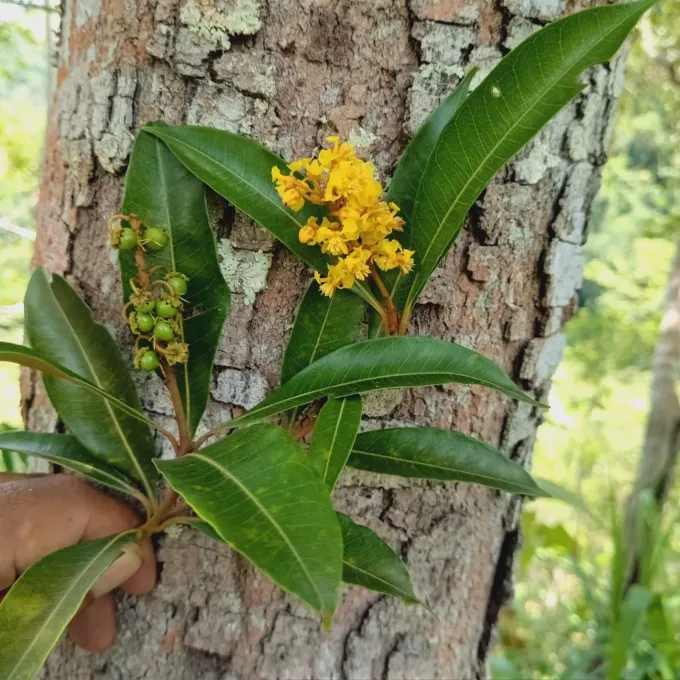
Description
Growing requirements
Byrsonima spicata, commonly known as locust berry, is a prominent member of the Malpighiaceae family. It typically grows as a large evergreen shrub or a medium-sized tree in tropical environments.
The species is native to the Caribbean, Central America, and northern South America, where it thrives in lowland forests and various secondary vegetation types.
The plant requires a strictly tropical climate to flourish. It prefers well-drained soils, although it exhibits remarkable resilience to different soil textures ranging from acidic to neutral.
Agricultural management of the tree focuses on maintaining adequate soil moisture during the initial growth stages, although mature specimens are somewhat drought-tolerant.
Economically, the tree is highly valued for its edible fruits, which are processed into jellies, jams, and traditional beverages, as well as for its durable, high-quality timber.
Main diseases and pests
Like many tropical tree crops, Byrsonima spicata can be affected by various insect pests, including scale insects and mealybugs that congregate on the underside of leaves.
Fungal pathogens represent a significant threat, especially during rainy seasons when humidity remains consistently high, potentially leading to leaf blight or fruit rot.
Integrated pest management strategies involve monitoring the foliage for early signs of infestation and ensuring proper plant spacing to facilitate air circulation.
Maintaining tree vigor through appropriate fertilization and timely pruning is essential to increase the natural resistance of the tree against common biological stressors.
Standard horticultural practices also include regular orchard sanitation to remove fallen fruit and debris, which can serve as breeding grounds for pests and fungi.