
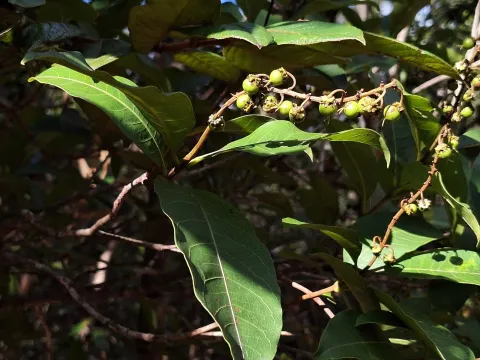
Byrsonima
Byrsonima
Byrsonima, known in South America as murici, belongs to the Malpighiaceae family. It is a woody plant native to the tropical and subtropical regions of the Americas.
What the section contains

Byrsonima
The plant prefers well-drained soils with low nutrient content, often adapting to the nutrient-poor acidic soils of savannas known as cerrado. It demonstrates high resistance to drought periods and high levels of solar radiation.
For optimal growth, Byrsonima requires a warm climate without sharp temperature fluctuations. The crop does not tolerate frost, so commercial cultivation is limited to the tropical zone.
The root system of the plant is deep, allowing it to successfully extract moisture from lower soil layers during dry seasons. It is capable of growing both in open spaces and within sparse tropical forests.
Biologically, Byrsonima is an evergreen tree or shrub with oppositely arranged leaves. The fruits of the crop are small drupes with a distinct aroma, highly valued by the local population for their specific flavor.
The yield of Byrsonima directly depends on light conditions and the age of the plant. Fruits are formed in clusters and require regular care to maintain consistent production.
In its natural habitat, yields may vary; however, with proper agricultural techniques and the selection of superior varieties, performance indicators increase significantly.
Byrsonima fruits are widely used in the food industry for preparing juices, ice cream, liqueurs, and desserts. Due to their high vitamin C content and specific lipids, they are in demand in local markets.
Economic use also includes the extraction of essential oils from the fruits. The fruits are processed immediately after harvest due to their rapid spoilage at room temperature.
The wood of certain Byrsonima species is also used in carpentry due to its hardness and durability, which adds value to the crop as an agricultural asset.
The main threats to Byrsonima are related to fungal infections of the foliage during periods of high humidity. Regular canopy pruning helps improve air circulation and reduce disease risks.
The plant can be attacked by specific types of tropical insect pests that feed on the sap of young shoots. Monitoring pest populations is an essential step in crop protection.
Weeds in the tree basins pose serious competition for young Byrsonima trees. The use of mulching is recommended to suppress weed growth effectively.
Improper irrigation that leads to waterlogging triggers root rot, which is the most dangerous condition for this species. Soil drainage remains a key requirement of good agricultural practice.
Anthracnose can affect fruits during their ripening period, reducing the marketability of the harvest. Applying preventive fungicidal treatments helps preserve product quality.