
Byrsonima lucida
Byrsonima lucida
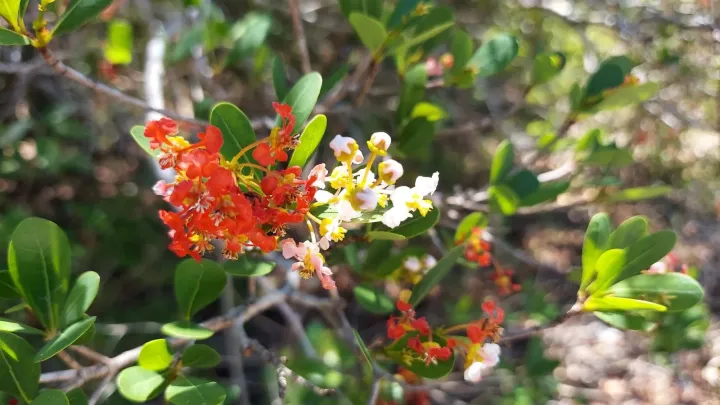
Description
Growing requirements
Byrsonima lucida, commonly known as locustberry, belongs to the Malpighiaceae family. This evergreen woody shrub is prized for its attractive, glossy foliage and ability to thrive in harsh environments.
Native to the Caribbean, South Florida, and Central America, this plant is naturally adapted to limestone-based soils and rocky terrain. It acts as a resilient native shrub in its natural range.
In terms of climate, it requires full sun exposure and frost-free conditions to reach its full potential. It is highly valued for its salt tolerance, making it ideal for coastal landscapes.
The agronomic management of this species is relatively straightforward. Once established, it requires minimal irrigation as it possesses a high tolerance for drought and heat.
Pruning is recommended for maintenance purposes to manage its growth habit and density. Frequent shaping helps improve the plant's structural integrity and aesthetic appeal in garden settings.
Main diseases and pests
The primary threat to the health of this shrub is excessive soil moisture, which often leads to root rot. Well-draining soil is essential for long-term plant survival.
Fungal leaf spot diseases may appear in humid environments or areas with poor air circulation. Proper spacing during planting is a vital preventative strategy for the grower.
Pests such as scale insects and mealybugs can infest the stems and leaves, potentially weakening the plant over time. Early detection through regular visual scouting is crucial.
Nutrient deficiencies, particularly chlorosis, can occur if the pH levels of the soil are not managed correctly. Monitoring the soil composition ensures optimal nutrient uptake.
Consistent maintenance, including clearing debris under the shrub and occasional monitoring for pest populations, keeps the plant resistant to secondary environmental stressors.