
Barbados cherry
Malpighia glabra
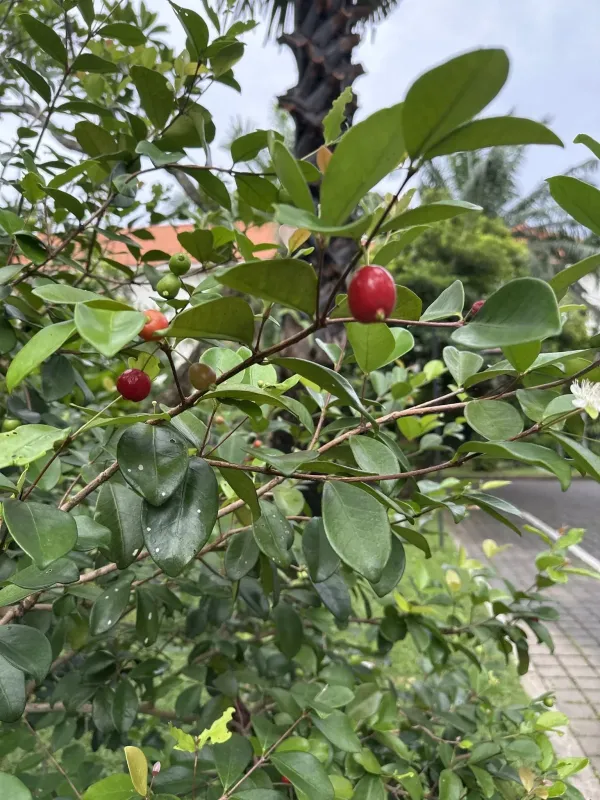
Description
Sowing dates
Propagation of Malpighia glabra in both industrial and home garden settings is primarily achieved through seeds or stem cuttings. Seeds should be sown in a well-drained, nutrient-rich substrate at soil temperatures not lower than 22–25 degrees Celsius.
Cutting propagation is the preferred method for maintaining specific cultivar traits. Softwood or semi-hardwood cuttings are treated with rooting hormones and kept under high humidity conditions, such as a greenhouse or plastic cover, until full root development occurs.
Young seedlings should be transplanted to the field only after the threat of frost has completely passed. It is crucial to select a site sheltered from strong winds, which can damage brittle branches and cause premature flower drop.
Planting density depends on the chosen management system and crown pruning technique. In intensive orchards, spacing should facilitate adequate air circulation between trees to prevent the development of fungal infections.
Regular irrigation during the first months after planting is vital for establishing a strong root system. While Barbados cherry has moderate drought tolerance, consistent soil moisture is essential for maximizing commercial fruit yield.
Growing requirements
Malpighia glabra belongs to the Malpighiaceae family and grows as an evergreen shrub or small tree. Native to the American tropics and subtropics, it thrives in warm, sunny locations with ample open space.
The crop is extremely sensitive to low temperatures and cannot withstand frost. The optimal temperature range for active vegetative growth and productive flowering is between 20 and 30 degrees Celsius.
The plant requires well-aerated soil with a neutral to slightly acidic pH level. Waterlogging is detrimental to the root system, so in heavy clay soils, it is necessary to construct a high-quality drainage layer.
Regular fertilization with balanced mineral compounds is needed, especially during the flowering and fruit-setting phases. Micronutrient deficiencies, particularly iron or zinc, often manifest as leaf chlorosis.
Pruning is an essential agrotechnical practice for this species. Formative pruning helps contain vertical growth and stimulates the development of lateral fruiting branches, which significantly simplifies the harvesting process.
Yield
The primary economic use of Malpighia glabra is the production of its fruits, widely known as acerola. These fruits are highly valued for their exceptionally high vitamin C content, which exceeds that of citrus fruits by a significant margin.
Yield depends on tree maturity, light availability, and overall orchard management. A mature tree, under optimal care, can produce multiple harvests within a single growing season.
Barbados cherries are highly perishable once harvested. Consequently, in industrial operations, the fruit is immediately frozen or processed into purees, juices, and dietary supplements.
Ripe fruits are bright red, juicy, and have a pleasant sweet-tart flavor. Beyond vitamin content, they are rich in antioxidants, flavonoids, and other essential nutrients sought after by the food and nutraceutical industries.
The crop potential is massive given the global demand for natural vitamin sources. Research suggests that implementing drip irrigation and modern fertigation practices can substantially increase yields per hectare.
Main diseases and pests
Malpighia glabra is susceptible to various pests common to tropical fruit crops. The most significant threats include scale insects, spider mites, and aphids, which feed on the sap of young leaves and tender shoots.
Fungal diseases, such as anthracnose and powdery mildew, can proliferate under high humidity and poor canopy ventilation. Timely removal of affected tissues and periodic fungicide application are key control measures.
Nematodes can also pose a serious challenge when growing on infested soils by damaging the root system. Prevention relies on using certified disease-free nursery stock and strictly following crop rotation practices.
Non-infectious threats include moisture stress, which leads to fruit drop, and excessive sunlight, which causes solar lesions on the fruit. Shade netting can be an effective management tool in regions with high solar radiation.
Regular orchard monitoring is essential, particularly during the blooming phase. An integrated pest management (IPM) system, combining biological and chemical interventions, provides the best defense against major crop-damaging factors.
Harvesting
Harvesting Barbados cherry is labor-intensive due to the thin skin of the fruit and its tendency to soften rapidly. Fruit must be picked by hand, taking care to avoid damaging the pedicel or surrounding flower buds.
Harvest timing is determined by the development of a bright red skin color. Depending on the climate, the harvest window can span several weeks, as fruits on a single tree do not ripen simultaneously.
To preserve maximum vitamin concentration, the fruit must be cooled immediately after picking. The optimal storage temperature for fresh fruit is between 0 and 2 degrees Celsius.
Maintaining fruit quality is critical, as the crop is destined for both fresh markets and industrial processing. Using ventilated, soft-sided containers during transport is vital to prevent bruising and premature rot.
Harvest scheduling must be synchronized with the logistics of processing facilities. Minimizing the time between harvest and processing is the most effective way to ensure high-quality output and high nutrient retention.