
Rotala hybrid
Rotala hybrids
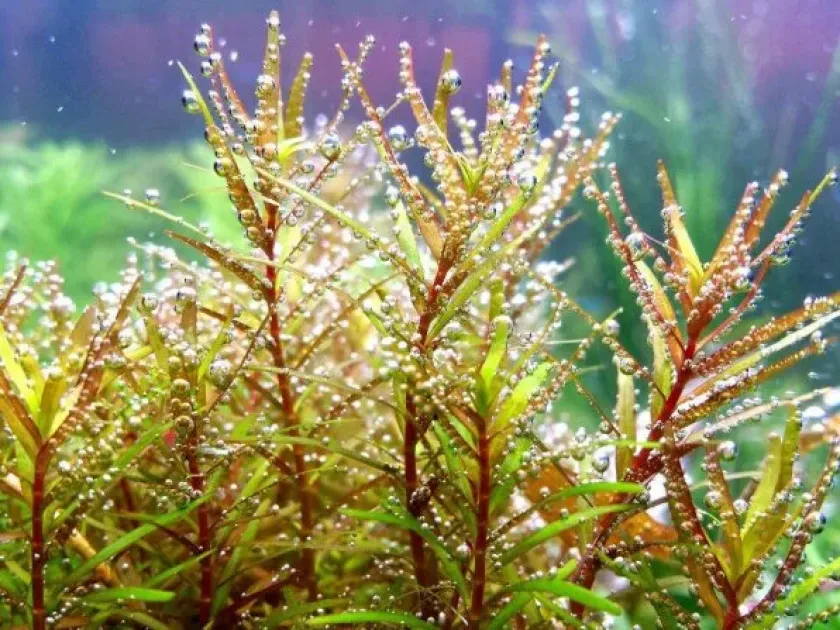
Description
Growing requirements
Rotala hybrid is a popular ornamental aquatic plant belonging to the Lythraceae family. These plants are intentionally bred cultivars, combining the aesthetic traits of various species to achieve vibrant colors and adaptable growth habits in submerged conditions.
Botanically, they are characterized by their delicate, elongated stems and narrow, opposite leaves. The coloration is highly dependent on light intensity and the availability of iron and micronutrients in the water column and substrate.
Successful cultivation requires high light intensity, ideally between 0.5 to 1.0 watts per liter of water. Insufficient lighting leads to etiolation, where the plant grows tall and leggy, eventually losing its characteristic leaf density and pigmentation.
Temperature requirements are standard for tropical aquatic plants, typically ranging from 22 to 28 °C. The water should be slightly acidic to neutral, with a soft to medium hardness level, as this most closely mimics the natural conditions of the parent species.
Carbon dioxide (CO2) supplementation is highly recommended to achieve maximum color potential. Without added CO2, these hybrids grow much slower and often appear dull compared to plants grown in high-tech aquarium setups.
Main diseases and pests
Algae outbreaks are the primary threat to Rotala hybrid health. Diatoms and hair algae can easily overwhelm the foliage, blocking photosynthesis and causing the plant to wither and eventually rot away if not addressed quickly.
Snails and certain crustaceans may damage young growth tips. While not strictly pests in all cases, a high population density can prevent the plant from developing its characteristic dense, bushy structure.
Nutrient deficiencies, specifically iron and phosphate, cause chlorosis and stunted development. If the plant is not provided with adequate fertilizers, it will exhibit pale leaf tips and eventually drop its lower foliage, leading to a degraded appearance.
Bacterial rot, often triggered by poor water flow and accumulated organic debris, can cause the stems to soften and disintegrate at the base. Regular water changes and siphon cleaning are essential for prevention.
Pruning is a crucial maintenance task for this plant. By cutting the stems regularly, the aquarist encourages lateral growth and branching, which helps maintain a thick, healthy stand of plants and keeps the colony rejuvenated.
Harvesting
Harvesting or propagation is typically done through stem cuttings. Once the stems reach the water surface or become too dense, the top portions are trimmed to be replanted into the substrate to start new colonies.
The cuttings should be at least 5–10 cm long, with the bottom leaves removed to prevent rotting after planting. This method ensures continuous growth and allows for the expansion of the decorative planting area.
Proper harvest technique involves using sharp, specialized aquatic scissors to make clean cuts, preventing unnecessary tissue crushing. This minimizes the risk of infection and promotes rapid healing of the mother plant.
The removed stems should be placed in well-lit areas with sufficient nutrient supply to ensure they root successfully. In optimal conditions, root development occurs within a few days after replanting.
Strategic harvesting helps prevent the plant from overshadowing itself, maintaining a healthy ecosystem within the tank and ensuring that all layers of the plant receive adequate light and water circulation.