
Rotala wallichii
Rotala wallichii
Description
Growing requirements
Rotala wallichii is a delicate stem plant belonging to the Lythraceae family. Native to the tropical regions of Southeast Asia, it thrives in soft, slightly acidic waters found in marshes and slow-moving streams.
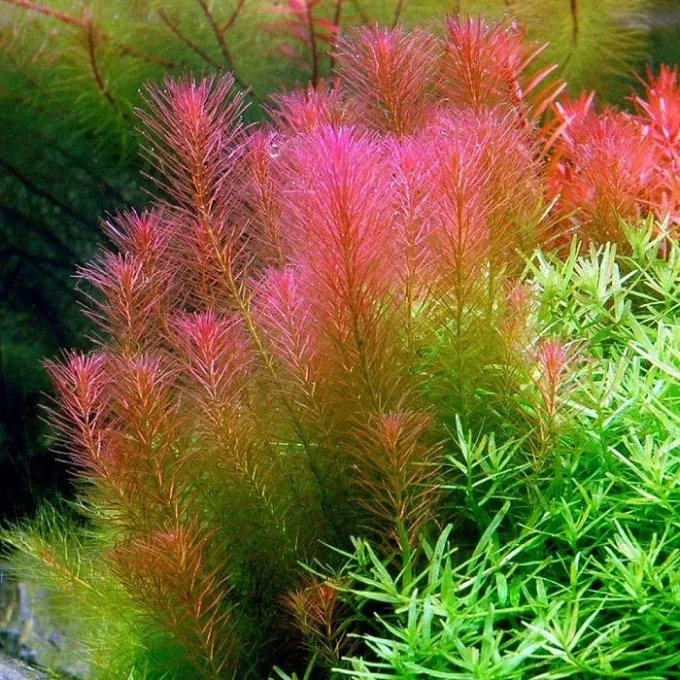
Botanically, it is characterized by its whorled, needle-like leaves that form dense, feathery stems. Under intense light and proper nutrition, the foliage exhibits a brilliant pink to deep red coloration.
Successful cultivation requires high-intensity lighting to maintain its vibrant color and compact growth pattern. Low light conditions typically cause the stems to stretch and lose their lower foliage prematurely.
Carbon dioxide (CO2) supplementation is mandatory for healthy development. Without a consistent CO2 injection, Rotala wallichii will struggle to photosynthesize efficiently, leading to stunted growth and loss of color intensity.
Soil requirements include a nutrient-rich, acidic substrate. Because the plant has a relatively weak root system, it primarily absorbs nutrients through its leaves, requiring high-quality liquid fertilizers supplemented with iron.
Main diseases and pests
Algae infestations represent the primary threat to Rotala wallichii. Fine-leaved plants are particularly susceptible to hair algae or biofilm coverage, which rapidly smothers the leaves and restricts gas exchange.
Nutrient imbalances, particularly low levels of iron or potassium, quickly result in chlorosis. This condition presents as yellowing or whitening of the new growth tips, eventually causing necrosis of the stem tissues.
Temperature stress is a significant concern for this species. Water temperatures exceeding 28 degrees Celsius can lead to rapid stem decay, especially if the oxygen levels in the water column are simultaneously low.
Environmental instability, such as fluctuating pH or hardness levels, often triggers leaf shedding. Sudden changes in water chemistry during routine maintenance can cause the plant to drop its leaves within a few days.
Mechanical damage from overly aggressive fish species or improper handling during maintenance can break the fragile stems. Great care must be taken when trimming or replanting to avoid damaging the stem structure.