
Rotala rosea
Rotala rosea
Description
Growing requirements
Rotala rosea is a captivating aquatic plant species belonging to the family Lythraceae. Originating from the tropical wetlands of Asia, this plant has gained popularity in professional aquascaping due to its striking coloration and delicate structure.
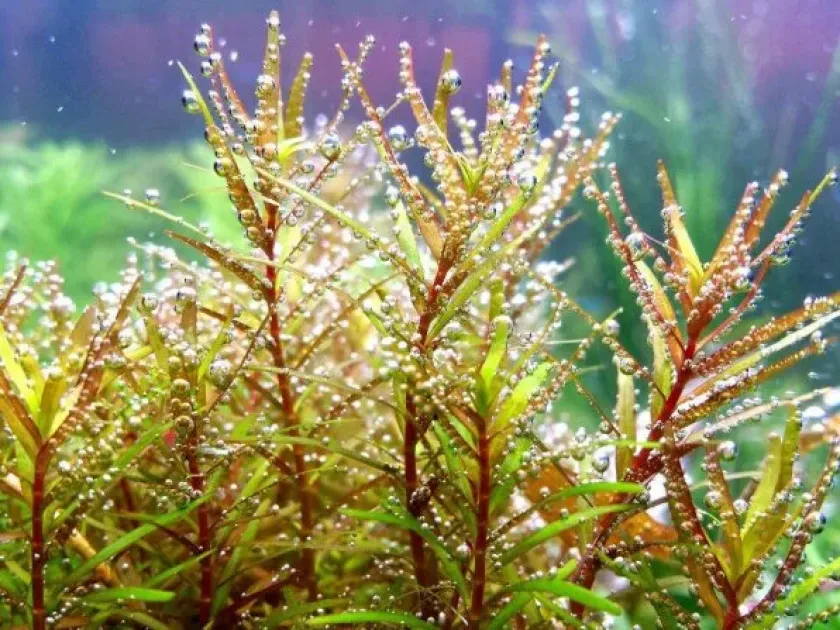
The botanical structure of the plant features whorled, narrow leaves that are highly responsive to environmental changes. In ideal conditions, the plant exhibits a vibrant pink hue, which serves as a visual focal point in freshwater aquarium layouts.
Successful cultivation requires high-intensity lighting, ideally ranging from 0.5 to 1.0 Watts per liter of water. Providing a full-spectrum light source is essential to maintain the plant's pigment intensity and prevent etiolation of the stems.
Water parameters play a crucial role in the development of Rotala rosea. The plant thrives in soft to moderately hard water with a pH range between 6.0 and 7.0. Constant CO2 supplementation is strictly recommended to achieve optimal photosynthetic rates.
For sustainable growth, the root system needs a nutrient-dense substrate rich in iron and essential minerals. Regular maintenance, including systematic pruning and water changes, ensures healthy growth and prevents the accumulation of waste products that could inhibit development.
Main diseases and pests
The primary threats to Rotala rosea include competitive algal blooms such as green hair algae or staghorn algae. These organisms compete for nutrients and light, often suffocating the delicate foliage of the Rotala.
Furthermore, nutrient deficiencies, particularly regarding nitrogen and iron, lead to leaf chlorosis and stem necrosis. Sudden fluctuations in temperature or chemical parameters often result in the sudden melting of the plant tissues.