
Rotala leptopetala
Rotala leptopetala
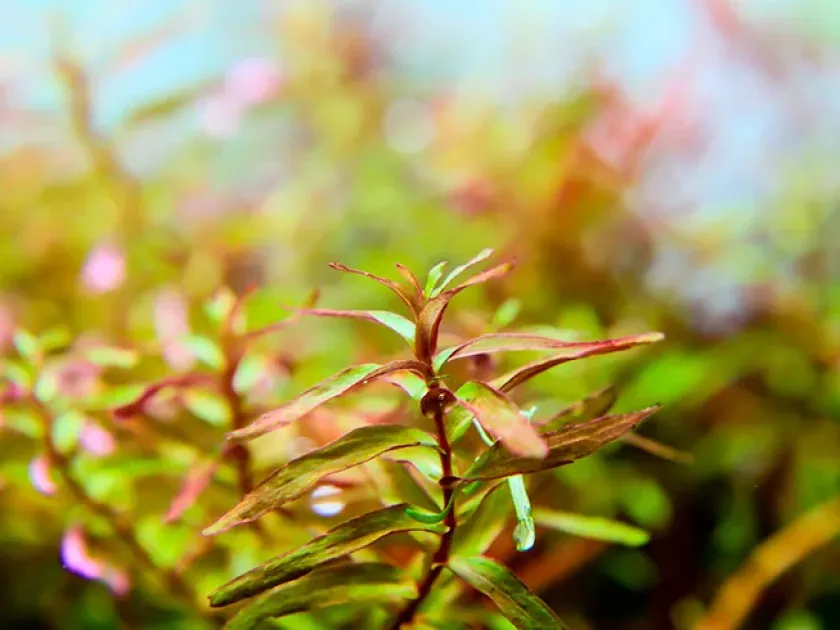
Description
Growing requirements
Rotala leptopetala is a botanical species belonging to the Lythraceae family. It is a herbaceous plant that thrives in wetland environments, often found in tropical or subtropical zones where water is abundant throughout the growing season.
The native distribution of this species is primarily concentrated in the Asian region. It has adapted to grow along riverbanks and in swampy terrains, which defines its biological preference for high humidity and consistent moisture levels.
Cultivation requirements include a nutrient-rich substrate and intense light exposure. In controlled environments like aquariums, the plant needs a balanced supply of carbon dioxide to maintain its metabolic rate and vivid appearance.
The ideal climate for this plant involves temperatures between 22 and 28 degrees Celsius. Stability in water parameters, specifically pH and mineral hardness, is essential for the plant to avoid stress-related growth retardation.
Commercially, the plant is highly valued in the aquascaping industry. Its unique leaf structure and ability to form dense, colourful clusters make it a staple for hobbyists aiming to recreate naturalistic underwater landscapes.
Main diseases and pests
The most significant threat to the health of this species is an inadequate light spectrum or duration. When lighting levels are insufficient, the plant undergoes etiolation, leading to weak, elongated stems that fail to support healthy leaves.
Nutrient deficiencies, particularly regarding iron and potassium, lead to severe health issues like leaf chlorosis. If the plant does not receive specific fertilizers, its tissue becomes thin, eventually resulting in the decay of the entire stem.
Algal blooms pose a major competitive threat. If algae colonize the surface of the leaves, they limit light absorption, causing the Rotala to weaken and eventually die off due to a lack of energy for photosynthesis.
Pests such as small aquatic crustaceans or insects can occasionally cause mechanical damage. In greenhouse settings, aphids or spider mites can target the leaves if the plant is grown in its emersed (land) form.
To maintain a healthy crop, growers must focus on regular pruning. Pruning encourages lateral growth and ensures that the plant remains compact and dense, which significantly reduces the accumulation of debris that can harbor pathogens.