
Premna trichostoma
Premna trichostoma
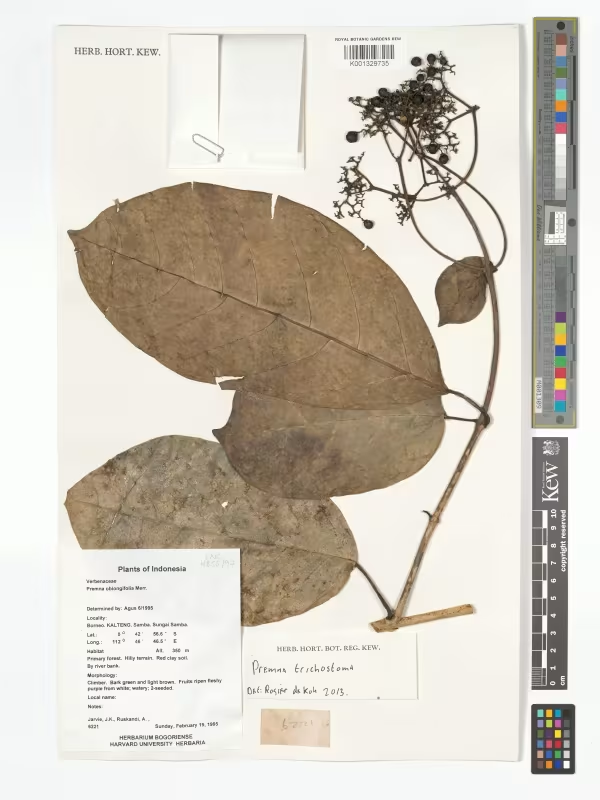
Description
Growing requirements
Premna trichostoma belongs to the Lamiaceae family and is a woody shrub native to tropical regions of Asia. It is valued for its unique phytochemical profile, which has attracted interest in both botanical research and local agricultural practices.
The cultivation of this species requires a warm, humid climate with no threat of frost. It thrives best in well-drained loamy soils, which are rich in organic matter. Proper soil preparation is essential to prevent waterlogging, as the root system is highly sensitive to hypoxia.
Regarding light requirements, the plant prefers bright, indirect sunlight. In forest-edge environments where it naturally occurs, it often adapts to partial shade, which protects the foliage from excessive heat and direct radiation during the peak of the day.
Agrotechnical management involves annual pruning to maintain plant health and encourage the production of secondary metabolites. Regular irrigation is necessary during the establishment phase, while established plants show moderate resilience, though consistent moisture boosts overall yields.
The economic value of this crop is primarily linked to the pharmaceutical industry. Its leaves and roots are harvested for their anti-inflammatory and antiseptic properties, making it a sustainable crop choice for regions with compatible tropical environmental conditions.
Main diseases and pests
The most common diseases affecting Premna trichostoma include fungal infections like leaf spot and powdery mildew. These issues often arise due to poor canopy ventilation or high humidity levels that do not allow the leaves to dry properly after rainfall.
Pest pressure is mainly attributed to mites and aphids, which feed on succulent new growth. Integrated pest management strategies, focusing on biological controls and maintaining vigorous plant health, are highly recommended to minimize chemical input in production.