
Premna barbata
Premna barbata
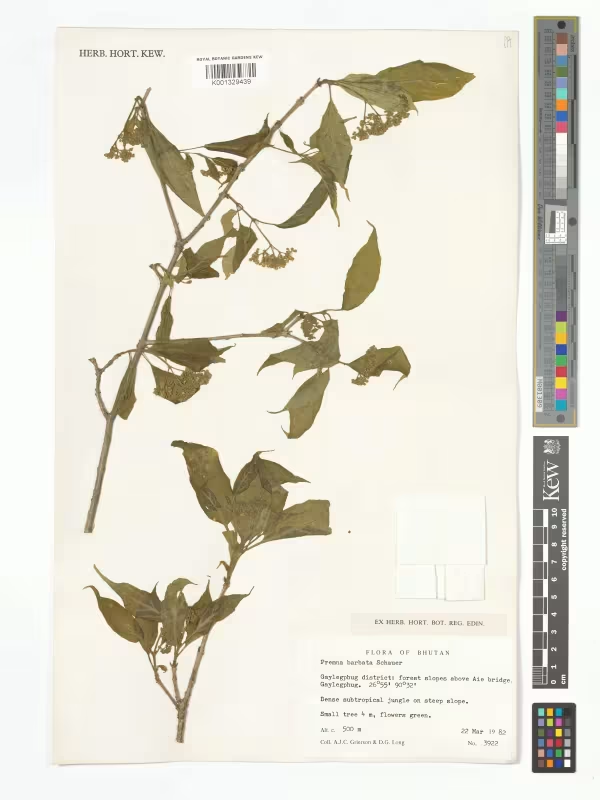
Description
Sowing dates
Propagation of Premna barbata is primarily achieved through seeds or stem cuttings. Seeds are sown in a well-drained, nutrient-rich substrate after the dormancy period has ended.
The optimal time for sowing is during the beginning of the spring season when stable warm nighttime temperatures are established. It is important to ensure seed stratification or warming to accelerate germination.
When using cuttings, they are taken from young woody shoots and treated with rooting hormones. Cuttings are planted in greenhouse conditions to maintain high levels of humidity.
Successful rooting requires avoiding direct ultraviolet rays, using shade during the first weeks after planting. Young plants are transplanted into individual containers once two pairs of true leaves appear.
Planting density depends on the purpose of cultivation; however, for industrial farming, it is recommended to keep a distance of 1.5–2 meters between bushes to ensure proper air circulation.
Growing requirements
Premna barbata belongs to the Lamiaceae family, although it was previously classified under the Verbenaceae family. This is a perennial shrub or small tree native to the tropical forests of Southeast Asia.
The crop has high requirements for temperature regimes: it prefers a tropical climate without sharp temperature fluctuations. The ideal thermometer readings are in the range of +22 to +30 degrees Celsius.
For normal development, the soil must be fertile, loamy, or sandy, with a pH level between 6.0 and 7.0. The plant is extremely sensitive to waterlogging, making high-quality drainage essential.
Lighting should be intense but diffused, as harsh midday sun can lead to leaf scorching. In temperate climates, cultivation is possible only within greenhouses or controlled environments.
Watering should be regular but moderate, taking the plant's growth phases into account. During the growing season, water demand increases, while in winter, watering is reduced to prevent root rot.
Yield
The productivity of Premna barbata is evaluated by the volume of plant material harvested, represented primarily by leaves and bark. Yield depends on the bush age and the intensity of care.
In its natural habitat, the plant can reach significant sizes, allowing for multiple harvests per year. However, in controlled conditions, the primary production volumes are more limited.
Maximum productivity is observed from the 3rd to the 5th year of the plant's life with proper formative pruning. Pruning stimulates branching, which directly increases the total vegetative mass.
Harvesting is performed mainly in dry weather to avoid the development of fungal diseases after mechanical damage to the shoots. The quality of raw material depends directly on drying conditions.
The average yield of dried medicinal material from one mature specimen can reach 2–4 kilograms when all agronomic regulations are followed.
Main diseases and pests
The main threats to Premna barbata are insect pests, such as spider mites and mealybugs, which become active under low humidity conditions.
Fungal diseases, including root rot, often develop due to excessive watering and poor soil aeration. Affected areas require immediate sanitary pruning.
Phyllosticta leaf spot can occur during high humidity and poor ventilation. Prevention consists of treating the plants with copper-based fungicides.
Aphids can also attack young shoots, sucking the cell sap, which leads to leaf deformation. Systemic insecticides are recommended for their control.
To maintain the health of the crop, it is recommended to conduct regular phytosanitary monitoring and remove weeds, which can act as intermediate hosts for various pests.
Harvesting
Harvesting Premna barbata is carried out manually to preserve the integrity of the medicinal components. It is important to select only healthy, well-formed leaves without signs of damage.
Leaves are cut in the morning hours after the dew has dried, which ensures the maximum concentration of essential oils and active substances in the plant tissues.
Bark is harvested by carefully removing it from side branches, avoiding critical damage to the main trunk to ensure the plant continues its development.
After collection, the plant material is sent for primary processing, including cleaning from dust and quality sorting. Drying is carried out in shaded, well-ventilated rooms.
Storage of the dried material is carried out in airtight containers away from sunlight to preserve the biological activity of the plant's components.