
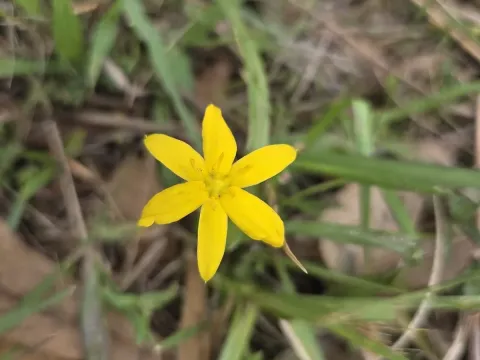
Yellow star grass
Hypoxis hirsuta
Hypoxis hirsuta, commonly known as yellow star grass, belongs to the family Hypoxidaceae. It is a perennial herb characterized by its distinct corm-like rootstock and hairy leaves that give it its specific epithet.
What the section contains
Yellow star grass
Native to North America, the plant typically inhabits prairies, meadows, and open woodlands. Its range extends across various temperate zones, where it has adapted to specific seasonal shifts.
For successful cultivation, the plant requires well-drained, sandy, or loam soils. It thrives in locations where water does not pool, as the corms are prone to rot under stagnant moisture conditions.
Environmental conditions should favor full sun to partial shade. The plant requires a dormant period, usually triggered by temperature changes, which is essential for stimulating spring blooming.
Agronomic management involves minimal intervention. It is recommended to clear the surrounding area of invasive weeds that may outcompete this relatively low-growing species for sunlight and soil nutrients.
The most significant threat to Hypoxis hirsuta is crown rot caused by poor soil drainage. Ensuring that the site remains airy and well-drained is the primary defense against this issue.
Pests such as snails and slugs can be particularly damaging in spring when new, tender foliage emerges from the ground, often requiring physical barriers for control.
Fungal diseases like leaf spot or mildews may occur during periods of prolonged high humidity and lack of air circulation around the plants.
Soil-borne pathogens can affect the corm if the site remains consistently wet throughout the year, especially in heavy clay substrates that retain moisture.
Proper sanitation, including the removal of dead or diseased foliage at the end of the season, helps reduce the inoculum load for the following year's growth.