
Woolly St. John's wort
Hypericum lanuginosum
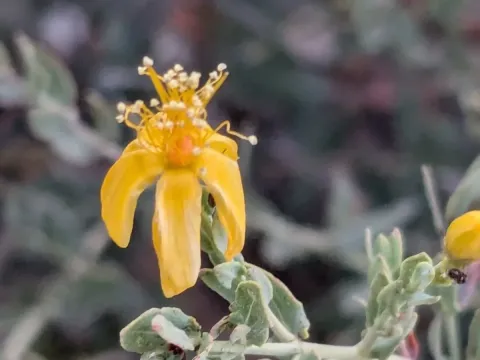
Woolly St. John's wort (Hypericum lanuginosum) is a perennial herbaceous plant belonging to the Hypericaceae family. It is distinct due to its unique woolly pubescence, which acts as an adaptation to the harsh, dry, and sunny environments typical of its native Mediterranean mountainous ranges.
What the section contains
Woolly St. John's wort
Botanically, the plant features small, resilient leaves and bright yellow flowers that are highly valued for their phytochemical properties. It grows in compact mounds, making it a sustainable choice for cultivation in poor, rocky, or sandy soils where other crops struggle to establish.
The cultural requirements dictate a site with excellent drainage. Hypericum lanuginosum is intolerant of waterlogged conditions, which can lead to rapid decline. It prefers full sun exposure to maintain its chemical composition and healthy growth habit, reflecting its natural habitat's characteristics.
Regarding climate, this species is well-suited for temperate to warm zones. It is remarkably drought-tolerant once established, requiring supplemental water only during the initial rooting phase or extreme, prolonged heat waves. Low atmospheric humidity is preferred to prevent moisture-related foliage diseases.
Agrotechnical management should focus on maintaining soil aeration and preventing nutrient excess. Over-fertilization can lead to lush vegetative growth that is more susceptible to pests and disease, reducing the efficacy of the secondary metabolites produced by the plant.
Root rot is the primary physiological threat to Hypericum lanuginosum. It typically occurs when drainage is insufficient, leading to the rapid decay of the root system. Proper site selection and elevated planting techniques are the best preventative measures.
Powdery mildew represents a frequent fungal challenge, especially in areas with stagnant air. Increasing plant spacing and removing excess foliage around the base can improve airflow, effectively reducing the risk of fungal outbreaks throughout the growing season.
Insect pests such as spider mites can thrive in the hot, dry conditions preferred by this plant. Monitoring the undersides of the leaves during peak summer temperatures is essential for early detection and mitigation before damage becomes widespread.
Weed competition is a significant concern during the establishment phase. As a relatively slow-growing plant, Hypericum lanuginosum requires frequent manual weeding to ensure it has enough access to sunlight and soil resources without being choked out by invasive grasses.
Fungal leaf spots may occasionally occur after unseasonably wet springs. Maintaining good field hygiene by removing old plant debris at the end of the season helps prevent the carryover of spores and maintains the overall health of the production area.