
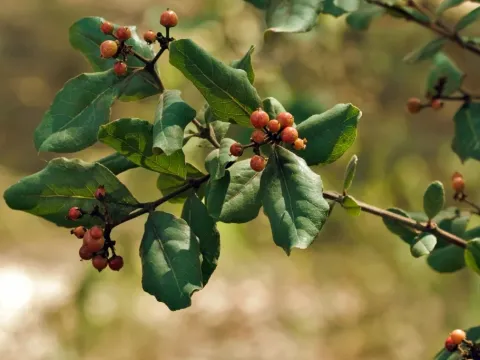
Psorospermum
Psorospermum
Psorospermum is a genus of shrubs and small trees belonging to the Hypericaceae family. These plants are native to tropical Africa and Madagascar, where they are adapted to various environments ranging from open wooded savannas to more dense thickets, reflecting their evolutionary flexibility.
What the section contains

Psorospermum
The environmental requirements for Psorospermum revolve around tropical climatic conditions. These plants thrive in areas with high light intensity and stable warm temperatures. Soil conditions are critical; the plants require deep, well-draining soils and are often found in terrains with lateritic properties that allow for optimal root respiration.
Botanically, Psorospermum species are distinguished by their glandular tissues, which are often visible as small dots on the leaves. These glands serve as storage sites for complex secondary metabolites, including anthraquinones and xanthones, which play a significant role in plant defense against herbivores and environmental stressors.
Agrotechnical management of this genus is not yet standardized for commercial agricultural production. Cultivation trials suggest that the plants are slow-growing and require minimal nitrogen inputs but benefit from consistent moisture management during the initial growth phases to establish a robust and deep-reaching root system.
The primary agricultural and scientific interest in Psorospermum lies in its pharmacological potential. Extracts from the bark and leaves have been investigated for their antimicrobial, antioxidant, and anti-inflammatory properties, making this genus a subject of increasing interest for medicinal plant researchers and sustainable agroforestry projects.