
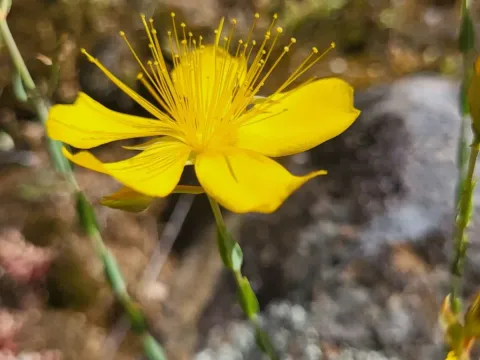
Olympic St. John's wort
Hypericum olympicum
Sowing Hypericum olympicum seeds is best performed in early spring, typically between March and April, using an indoor propagation method. This ensures an optimal environment for germination and the development of a robust root system before transplanting.
What the section contains
Olympic St. John's wort
Autumn sowing directly into the ground is also a viable method. In this case, the seeds undergo natural stratification through winter, which often leads to more uniform germination when the spring temperatures rise.
When sowing, it is crucial to remember that the seeds require light to germinate. They should be sown superficially, lightly pressed into the soil or covered with a very fine layer of sand rather than being buried deep.
Seeds maintain their viability for several years if stored in a cool, dry environment. The ideal germination temperature for this species ranges between 18 and 22 degrees Celsius.
Pricking out the seedlings should be done carefully once the second pair of true leaves has appeared. The roots are delicate and recover slowly, so minimal disturbance is key to successful establishment.
Hypericum olympicum is a member of the Hypericaceae family, native to the rocky slopes of the Balkan Peninsula and Asia Minor. It is a hardy, low-growing perennial shrub known for its resilience.
The plant has specific lighting requirements and must be placed in a fully sunny location. Sufficient sunlight is essential to stimulate prolific blooming and to maintain the plant's characteristic compact growth habit.
Well-drained soil is non-negotiable for this species. It prefers alkaline or neutral soil types and struggles significantly in heavy or waterlogged ground, so adding gravel or grit to the planting hole is highly recommended.
While relatively hardy, the plant may require winter protection in extremely cold climates with no snow cover. Covering it with evergreen boughs can help prevent frost damage to the branches.
The plant is drought-tolerant once established. However, during the active growing season, moderate watering is beneficial to maintain vibrant foliage and to encourage a longer, more spectacular flowering display.
The primary use of Olympic St. John's wort is in ornamental horticulture. It is highly valued for its long-lasting, bright yellow flowers, which feature prominent, elegant stamens.
In landscaping, this plant is a staple for rock gardens, gravel beds, and dry stone walls. Its low, spreading habit allows it to form dense, attractive cushions that suppress weeds and prevent soil erosion.
Beyond its aesthetic appeal, the species is studied for its chemical profile and presence of hypericin. While it has historical medicinal interest, modern cultivation focuses mainly on providing high-quality nursery stock.
Productivity in a commercial setting depends on plant density and proper pruning. Proper management allows nurseries to produce consistent, high-value decorative plants per square meter of greenhouse or field space.
Deadheading the faded flowers is a labor-intensive but rewarding practice. Removing spent blooms encourages the plant to produce a second flush of flowers, significantly increasing its market value and visual impact.
Fungal diseases represent the most significant threat to Hypericum olympicum, particularly root rot caused by poor soil drainage. Ensuring adequate aeration is the most effective preventative measure.
In humid or stagnant air conditions, powdery mildew can occur, manifesting as white dusty spots on the leaves. Fungicidal treatments may be necessary if the infestation becomes widespread.
Pests such as aphids and spider mites may target the plant, especially in hot and dry weather conditions. Regular inspection of the foliage is necessary to detect these pests before they cause damage.
Gastropods like slugs and snails can feed on tender young shoots in the spring. Using copper tape or crushed stone mulch around the base of the plant can provide a physical barrier against these pests.
Maintaining the overall health of the plant is the best defense. Avoid overcrowding by providing enough space between plants to allow for proper airflow and to prevent the build-up of moisture around the base.
Harvesting for floral use should occur when the flowers have just opened. Stems harvested at this stage have excellent vase life, making them popular in the cut flower industry for long-lasting arrangements.
For seed collection, the seed capsules should be cut just as they turn brown but before they split open. Drying them in a well-ventilated, shaded area ensures maximum seed yield and prevents scattering.
At the end of the season, a light pruning should be performed to maintain the plant's shape and remove dead material. This cleaning process helps the plant enter dormancy and prepares it for healthy spring growth.
For herbal material, the upper sections of the stems are harvested during the peak of the flowering season. Processing must be done carefully to avoid bruising the tissues and losing valuable oils.
Proper drying is essential for quality control. Drying should occur in a dark room with temperatures kept below 40 degrees Celsius to preserve the essential oils and the natural yellow pigments of the petals.