
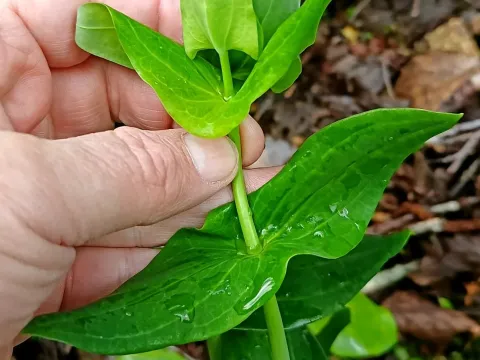
Perfoliate St. John's-wort
Hypericum perfoliatum
Perfoliate St. John's-wort (Hypericum perfoliatum) is a perennial herbaceous plant belonging to the Hypericaceae family. The seeds have high germination energy, but they require stratification to ensure uniform field emergence.
What the section contains
Perfoliate St. John's-wort
Sowing can be performed either in late autumn or early spring when soil temperatures reach 5–8 degrees Celsius. Row spacing should be maintained between 45–60 cm to provide optimal light exposure for the plants.
Seed depth should not exceed 0.5–1 cm because the seeds are very small and sensitive to soil compaction. Following the sowing process, it is recommended to roll the soil surface for better contact.
Establishing large-scale plantations often involves a nursery method where seedlings are transplanted at the 3–4 true leaf stage. This approach ensures a uniform stand and higher crop success rates.
The vegetation period from germination to the onset of flowering typically ranges from 60 to 85 days, making it a reliable crop in various temperate climatic zones.
This crop prefers well-drained loamy soils or chernozems with a neutral pH level. Waterlogged areas or heavy clay soils are unsuitable and can lead to root system decay during the rainy season.
Perfoliate St. John's-wort is a light-demanding species, so it should be cultivated in open, sun-exposed fields. Insufficient sunlight significantly reduces the concentration of beneficial bioactive compounds.
While the plant is relatively drought-tolerant, it requires irrigation during the budding phase to ensure optimal yield and raw material quality. Moisture consistency is vital during this critical growth stage.
Ideal temperatures for active growth range from 18 to 25 degrees Celsius. The species exhibits good resilience to mild frost, allowing it to adapt to various regional temperature fluctuations.
Maintenance involves regular inter-row cultivation to eliminate weeds and soil aeration. Applying nitrogen and phosphorus fertilizers in the second year of growth significantly boosts biomass productivity.
The dry biomass yield of Perfoliate St. John's-wort typically ranges from 1.5 to 3 tons per hectare, depending on plantation age, soil quality, and the level of agricultural management provided.
Peak productivity is usually observed during the 3rd and 4th years of the plantation. During this time, the root system is fully established, supporting robust development of the above-ground biomass.
Foliar feeding with microelements during the early budding phase can significantly enhance the chemical profile, specifically increasing the content of essential oils and specialized flavonoids.
Harvesting is performed at the beginning of mass flowering when the concentration of medicinal compounds reaches its maximum. Modern harvesters can be adjusted to collect the foliage efficiently.
After 5–6 years, productivity starts to decline as the rootstocks age. At this point, it is recommended to replant the field to maintain consistent high-quality output.
Fusarium wilt is one of the most serious threats, caused by soil-borne fungal pathogens. It results in yellowing of leaves and eventual plant death during the active vegetation stage.
Rust diseases can affect the leaf surface during periods of high humidity. Preventive measures include strict crop rotation and avoiding dense planting to maintain airflow throughout the stand.
Leaf beetles are a common pest that can severely damage foliage and flower buds. Monitoring population density is essential, and biological control methods are preferred for medicinal crops.
Aphids can infest the tips of young shoots, extracting sap and weakening the plant. Prompt intervention is necessary to prevent significant yield losses, focusing on natural predators or biorational sprays.
Weed competition is a major challenge during the early stages of establishment. Efficient weed control is critical for creating a productive stand that can compete with spontaneous vegetation.
Harvesting must be done during dry, sunny weather to prevent fungal mold development during the drying process. Damp raw material loses medicinal properties and degrades in color very quickly.
Only the upper 20–30 cm of the stems should be harvested, focusing on the leafy tops and flowering buds. Excessive woody lower stems should be excluded to maintain high product purity.
Drying is performed in shaded, well-ventilated areas or in controlled dryers at temperatures not exceeding 40–45 degrees. Overheating leads to the degradation of active flavonoids and oil loss.
Once dried, the raw material is processed to remove debris and graded by quality. The final product should be stored in multi-layered paper bags to maintain its aromatic and medicinal profile.
Storage must be in a dry, dark, and well-ventilated warehouse. Under proper conditions, the shelf life of the medicinal raw material remains excellent for up to two years.