
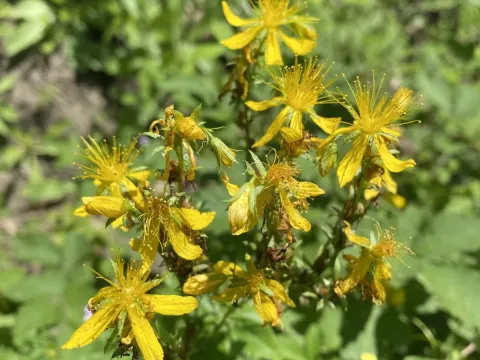
Montbre's St. John's wort
Hypericum montbretii
Sowing of Hypericum montbretii seeds is typically performed in the autumn, allowing for natural cold stratification during winter. If spring sowing is planned, seeds must be pre-treated by keeping them at low temperatures (2–5 degrees Celsius) for about a month to ensure successful germination.
What the section contains
Montbre's St. John's wort
Because the seeds are extremely small, they should be sown on the surface of the soil with minimal covering. A thin layer of sand or fine humus is sufficient to keep them in place while allowing necessary light exposure, as deep burial significantly hinders germination.
A seeding rate of 1 to 1.5 kilograms per hectare is generally recommended for commercial planting. Maintaining rows 45–60 centimeters apart is essential to allow for mechanical weeding and proper maintenance during the initial, slow-growing phase of the crop.
Since the seedlings develop quite slowly, it is crucial to prepare the seedbed thoroughly by eliminating perennial weeds before planting. Using a mechanical precision seeder designed for small seeds helps achieve a uniform plant stand and consistent plant density.
Alternatively, the transplanting method is widely used to ensure higher survival rates in the field. Seedlings should be transferred to the open ground when they reach the 3–4 true leaf stage, allowing them to establish a robust root system before harsh weather conditions arrive.
Hypericum montbretii, a member of the Hypericaceae family, is a sun-loving plant that requires open and bright locations to thrive. Adequate light exposure is critical for the biosynthesis of active compounds, which defines the crop's quality and medicinal value.
The crop prefers loose, well-drained loamy or sandy soils with a neutral or slightly acidic pH. Waterlogging is detrimental to this species; therefore, high-ground fields with good drainage systems are the best choice to prevent root rot and other moisture-related issues.
Hypericum montbretii exhibits good drought tolerance due to its deep root system, making it suitable for regions with variable rainfall. However, supplemental irrigation during prolonged dry spells is highly recommended to achieve maximum biomass yield and high-quality floral production.
Moderate temperatures ranging from 20 to 25 degrees Celsius are ideal for active growth. The plant is fairly resilient but requires well-ventilated conditions to prevent humidity buildup in the canopy, which can lead to fungal infections during humid summers.
In terms of crop rotation, Hypericum should not be replanted on the same plot for at least 4–5 years to avoid soil fatigue and the accumulation of host-specific pathogens. Cereals serve as excellent predecessors for this medicinal plant.
Powdery mildew is the most common fungal threat, often appearing in dense stands with poor airflow. It manifests as a white, dusty layer on the leaves, reducing the plant's photosynthetic capacity and lowering the overall quality of the harvested herb.
Root rot occurs in fields with poor drainage or excessive soil moisture. This disease can cause rapid wilting and plant death, creating patches of crop loss in the field. Proper soil management and timely weeding are the primary defenses against this persistent threat.
Aphids and various leaf-eating beetles can damage the crop by feeding on young foliage and floral buds. Such attacks not only reduce the yield but also weaken the plants, making them more susceptible to subsequent bacterial or fungal infections.
Rust infections, characterized by small orange spots on the undersides of leaves, can thrive in wet conditions. Maintaining distance between plants and ensuring high-quality sanitation practices are essential strategies to prevent the spread of these pathogens across the plantation.
- Implement sufficient spacing between rows for ventilation.
- Practice regular inter-row cultivation to keep weeds under control.
- Use organic fungicides or biological control agents if pests exceed economic thresholds.
Harvesting is conducted during the peak flowering phase, as this is when the concentration of hypericin and other essential secondary metabolites is at its highest. Timing is critical, as quality declines rapidly once the flowers begin to fade or seed production starts.
The plants are harvested by cutting the upper stems, typically 10–15 centimeters above the ground. This method ensures that the product contains only high-quality vegetative and floral parts while allowing the base of the plant to regenerate for future seasons.
Harvested material must be transported to the drying facility immediately to prevent heating and fermentation, which destroy valuable oils. Drying should occur in shaded, well-ventilated areas to maintain the plant's natural color and therapeutic properties.
Temperatures during artificial drying should not exceed 40–45 degrees Celsius to prevent the degradation of heat-sensitive compounds. Once the stems break with a crisp snap, the herb is considered dry enough for grinding and packaging for industrial use.
The dried raw material is highly valued in the pharmaceutical industry for its antiseptic, anti-inflammatory, and sedative applications. Developing reliable harvesting protocols is key to ensuring consistent supply for the global herbal medicine market.