
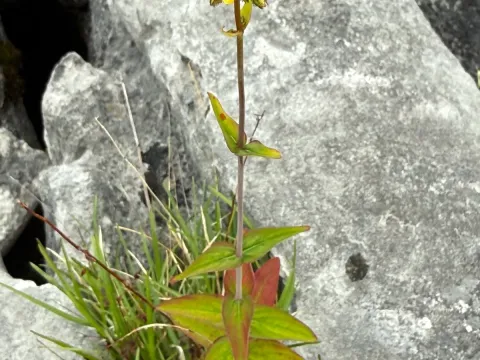
Mountain St. John's-wort
Hypericum montanum
Mountain St. John's-wort is typically propagated through seeds, which require a cold stratification period to break dormancy and ensure uniform germination.
What the section contains
Mountain St. John's-wort
Seeds should be surface-sown or covered with a very light layer of soil, as they are light-dependent and prone to failure if planted too deep.
Spring sowing is preferred after the threat of severe frost has passed, ensuring the soil remains consistently moist during the critical germination phase.
Row spacing should be maintained at 50–60 cm to allow for efficient weed control, as seedlings are slow to establish and susceptible to competition.
Establishing a uniform plant stand often takes time, and thinning may be necessary if the initial sowing density exceeds the target plant population.
As a member of the Hypericaceae family, this species thrives in environments that mimic its native montane habitats, specifically on calcareous or neutral soils.
The crop demands excellent soil drainage; waterlogged conditions are detrimental and often lead to root pathogens that compromise the health of the perennial stand.
While the plant shows a preference for full sun, it benefits from moderate humidity levels and protection from intense mid-summer heat stress.
Soil fertility should be managed through organic amendments, as the plant does not perform well in highly saline or heavily compacted substrates.
Climatic adaptability is one of its strengths, as the plant is hardy and capable of surviving cold winters if properly established before the dormant season.
Common pathological threats include fungal infections such as powdery mildew, which thrive in stagnant, high-humidity environments.
Insect pests, including various beetles and lepidopteran larvae, can cause significant defoliation, negatively impacting the total biomass and yield.
Integrated Pest Management (IPM) strategies, such as biological control and habitat manipulation, are highly recommended to minimize the use of synthetic chemicals.
Proper sanitation, including the removal of dead plant material at the end of the season, significantly reduces the overwintering inoculum of major pathogens.
Early detection through frequent field monitoring allows for localized intervention, preventing widespread damage across the plantation.
The optimal harvest window coincides with the peak flowering stage, which ensures the highest concentration of phytochemicals in the harvested biomass.
Manual or mechanical harvesting involves cutting the upper, tender portions of the flowering stems while leaving the basal growth intact for future regrowth.
Immediate post-harvest processing is critical, involving rapid drying in a shaded, well-ventilated facility to prevent degradation of active compounds.
Temperature control during the drying process is paramount; temperatures exceeding 40 degrees Celsius may cause the loss of valuable volatile components.
Once dried, the product should be stored in moisture-proof containers in a cool, dark location to maintain shelf-life and preserve therapeutic quality.