
Marsh St John's wort
Hypericum elodes
Marsh St John's wort, known botanically as Hypericum elodes, is a perennial herbaceous plant belonging to the Hypericaceae family. Unlike other members of the genus, this species is specifically adapted to wetland environments, making it a unique subject for specialized horticulture.
What the section contains
Marsh St John's wort
The native distribution of this plant includes the western and southern regions of Europe, where it thrives in acidic bogs, marshes, and along the margins of slow-moving streams. Its ecological flexibility allows it to dominate in saturated substrates that are unsuitable for most terrestrial plants.
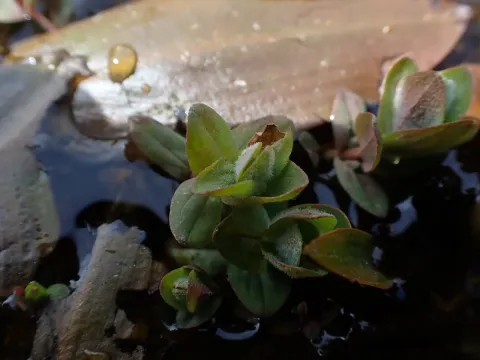
Morphologically, the plant is characterized by creeping stems that root at the nodes, creating a dense mat. The leaves are covered in soft, glandular hairs which give the plant a distinctively greyish appearance, complemented by small yellow flowers during the summer months.
Successful cultivation requires specific environmental conditions, primarily acidic, nutrient-poor, and waterlogged soils. It is essential to ensure that the substrate does not dry out, as the plant lacks the drought tolerance seen in other Hypericum species.
The primary use of this species is in landscape architecture, particularly for the ecological restoration of wetland areas and the design of pond margins. It serves as an effective ground cover that helps stabilize damp soil while providing aesthetic value to water features.
The most common threats to this species are fungal pathogens that proliferate in stagnant, high-humidity environments. Poor aeration can lead to root rot, which is a major concern when the plant is grown in deep water or poor drainage systems.
Insect pests include various leaf-feeding insects that typically inhabit wetland habitats. To mitigate these risks, growers should maintain adequate spacing between plants and ensure consistent water movement if the plant is maintained in an artificial aquatic system.