
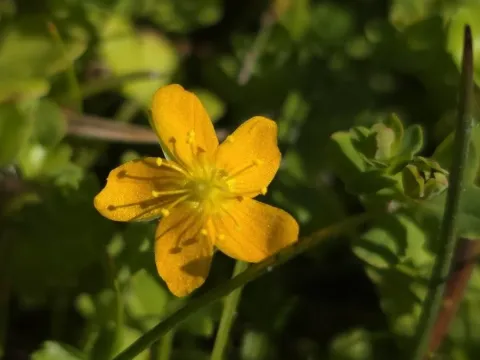
Japanese St. John's wort
Hypericum japonicum
Japanese St. John's wort is a perennial herbaceous plant belonging to the Hypericaceae family, known for its preference for moist environments and distinctive growth patterns.
What the section contains
Japanese St. John's wort
Sowing is typically scheduled for spring when soil temperatures stabilize, ensuring that the seeds can germinate successfully in a warm and well-lit environment.
The seeds are extremely small and should be sown on the surface of the soil, requiring moisture and light to break dormancy and initiate the growth process.
When starting from seeds, greenhouse conditions in early spring provide a significant advantage, allowing for the development of sturdy seedlings before outdoor transplanting.
Proper spacing, approximately 20 to 30 centimeters between rows, is recommended to ensure adequate light penetration and facilitate routine field maintenance.
This species thrives in high-moisture conditions and is naturally found near riverbanks and damp meadows in its native Asian habitats.
Fertile soils with a neutral or slightly acidic pH level are ideal for maximizing the growth rate and overall vitality of the plant throughout the growing season.
While it prefers full sun for optimal development, it is tolerant of partial shade, especially in hotter regions where excessive heat might stress the plant.
Consistent water availability is the most critical factor, as Japanese St. John's wort does not tolerate drought and will quickly show signs of stress if deprived of water.
Maintaining a clean, weed-free environment is essential to allow the plant to establish its root system without competition for nutrients and space.
The primary agricultural interest in this species lies in its medicinal properties, specifically the accumulation of active compounds such as hypericin in its aerial parts.
Harvesting for yield is conducted during the peak flowering stage, which ensures the highest concentration of bio-active elements required for pharmaceutical use.
Annual yields are significantly influenced by the level of soil management and the consistency of irrigation protocols maintained throughout the spring and summer.
Strategic pruning or cutting allows for multiple harvests per season, provided that the plants receive adequate fertilization to support rapid vegetative regeneration.
Processing the harvested material through controlled temperature drying is vital to maintain the integrity of the chemical compounds within the dried foliage.
The most common threats to Japanese St. John's wort are fungal infections, particularly root rot, which thrive in poorly drained and excessively humid field conditions.
Pest infestations such as aphids can reduce leaf quality and inhibit plant growth, necessitating frequent scouting and early intervention to maintain crop health.
Maintaining optimal airflow between plants by avoiding over-density is the best cultural practice to prevent the development of powdery mildew and other pathogens.
Integrated pest management strategies, focusing on biological controls, are preferred to ensure the final product meets high purity standards for human consumption.
Regular field inspection helps in identifying early symptoms of disease, allowing for the targeted removal of affected plants before the infection spreads across the field.
Harvesting is performed by cutting the stems several centimeters above the ground, a technique that protects the base and encourages healthy regrowth for future harvests.
Operations are best carried out in the morning hours, once any dew has evaporated, ensuring that the moisture content is manageable during the initial drying phase.
Careful handling during the harvest process prevents crushing the foliage, which helps preserve the essential oils and active compounds found within the leaves.
Once harvested, the material should be transported in well-ventilated containers to prevent overheating and premature degradation of the medicinal biomass.
Long-term storage of the dried product requires a cool, dry, and dark environment to maintain the shelf life and potency of the harvested medicinal raw material.