
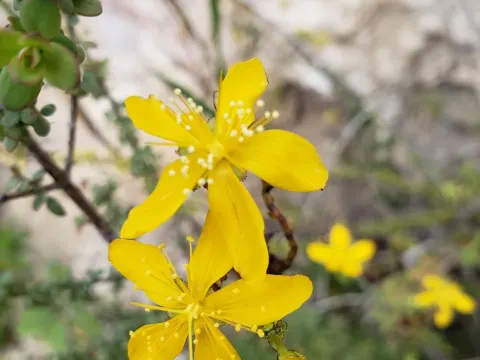
Hypericum thymifolium
Hypericum thymifolium
Hypericum thymifolium, a member of the Hypericaceae family, is a perennial subshrub native to the Eastern Mediterranean region. It is highly adapted to arid, rocky habitats, which defines its specific requirements for agricultural cultivation in controlled environments.
What the section contains
Hypericum thymifolium
The plant exhibits a distinct morphology, characterized by its thyme-like leaves and small but vibrant yellow flowers. These structural features are an evolutionary response to high solar radiation, allowing the plant to retain moisture while flourishing in exposed terrain.
To cultivate this species successfully, growers must ensure excellent soil drainage. The plant thrives in sandy, gravelly, or rocky substrates. It is essential to avoid sites with waterlogging, as the roots are highly susceptible to decay in heavy or compacted soil types.
Climatic requirements are centered on high light intensity and thermal stability. While the plant is drought-tolerant, supplemental irrigation is recommended during the establishment phase. It requires a sunny location to maximize the production of active phytochemical compounds.
The economic value of this crop lies in its secondary metabolites used by the pharmaceutical and cosmetic industries. It is particularly valued for its potential in creating natural skincare products and herbal supplements, provided that organic farming practices are strictly followed.
The most significant agronomic threats include fungal pathogens such as Pythium and Rhizoctonia, which proliferate in poorly drained soils. Maintaining proper spacing between plants is crucial to ensure adequate air circulation and reduce the risk of humidity-related diseases.
Insect pests such as spider mites and aphids are common in hot, dry conditions. Integrated pest management strategies, emphasizing biological control and the removal of infested plant material, are recommended to preserve the quality of the raw herbal harvest.