
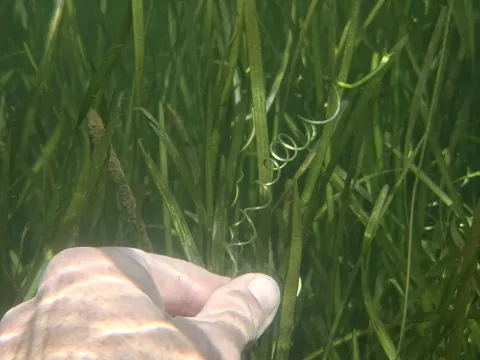
Vallisneria australis
Vallisneria australis
Vallisneria australis, belonging to the Hydrocharitaceae family, is a prominent aquatic plant native to Australia and New Zealand. It is highly valued for its elegant, ribbon-like leaves and its efficiency in oxygenating freshwater environments.
What the section contains
Vallisneria australis
The plant exhibits a rosette growth form with a robust root system, allowing it to anchor securely in various types of substrate. Its leaves can reach significant lengths, often reaching the water surface where they float, providing shelter for aquatic fauna.
Optimal growth occurs in temperatures ranging from 20 to 28 degrees Celsius. While it is adaptable to different water parameters, it thrives best in slightly alkaline conditions with moderate hardness, mimicking its natural riverine habitats.
Light requirements for this species are moderate to high. In environments with deep water, sufficient light penetration is essential to maintain the vigorous growth of the lower leaf sections and prevent premature leaf shedding.
Nutrient-rich substrate is vital for the development of healthy runners. Fertilization targeting the root zone, particularly using iron-rich fertilizers, significantly enhances the coloration and structural integrity of the leaves.
The main biological threat to this crop includes the overgrowth of filamentous algae, which can smother the plants and limit their access to essential light and dissolved carbon dioxide.
Environmental stress, such as sudden changes in pH levels, often results in leaf melting. This physiological reaction can quickly spread through the colony if the water quality is not stabilized immediately.
Invertebrate pests, especially certain species of snails, may graze on the soft, tender new shoots, leading to stunted growth. Effective pest management requires regular monitoring of the aquatic ecosystem's balance.
Bacterial decay in the substrate is a common issue when organic matter accumulates too rapidly. This process creates toxic pockets that can damage the delicate root system of the Vallisneria.
Overcrowding is a significant threat to long-term health. Without thinning, the lack of water circulation causes stagnation and promotes the development of various plant pathogens that target weakened specimens.