
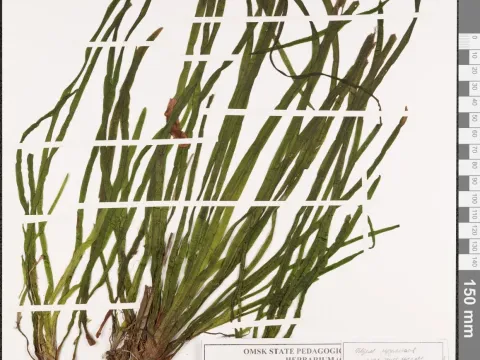
Vallisneria natans
Vallisneria natans
Vallisneria natans is a perennial aquatic plant belonging to the Hydrocharitaceae family. It is widely recognized for its long, ribbon-like leaves that create dense underwater "grass" meadows in suitable aquatic environments.
What the section contains
Vallisneria natans
The species is native to tropical and subtropical Asia, where it thrives in rivers, ponds, and lakes with slow-moving water. It is highly adaptable to various nutrient-rich substrates, provided the roots can establish securely.
Optimal growth is achieved in water temperatures ranging from 20 to 28 degrees Celsius. The plant requires moderate to high light intensity to maintain its characteristic vibrant green color and structural integrity of the leaf blades.
Regarding water parameters, the plant prefers a pH between 6.5 and 7.5. It is relatively tolerant of different water hardness levels but performs best in well-balanced freshwater systems with regular CO2 supplementation.
Cultivation technique primarily involves controlling the spread via runners. Because the plant propagates rapidly through vegetative stolons, periodic thinning is necessary to prevent the crowding of other aquatic species in the system.
This plant is primarily used in the aquaculture industry and the aquarium trade. It serves as an essential oxygenator, improving water quality and providing habitat for various aquatic fauna in controlled environments.
The production cycle is continuous, as the plant produces numerous daughter plants along its runners. In commercial greenhouse conditions, harvesting cycles can be very short, often resulting in high density and rapid biomass turnover.
The main threats to Vallisneria natans include epiphytic algae, which can smother the leaves and block necessary light for photosynthesis. Additionally, heavy infestations of certain freshwater snails can damage the tender leaf tissues.
Nutrient deficiencies, particularly regarding iron and nitrogen, often lead to yellowing leaves and stunted growth. Maintaining a stable environment is key to preventing fungal rot that can occasionally occur in the rhizome region during transport or poor substrate conditions.