
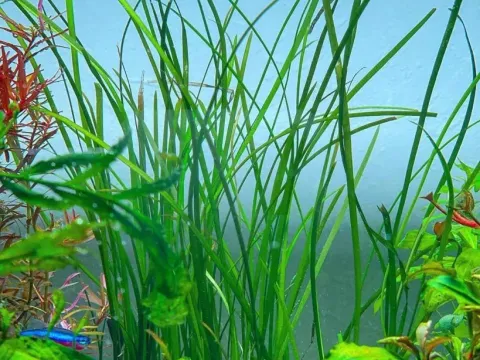
Vallisneria nana
Vallisneria nana
Vallisneria nana is an aquatic perennial plant belonging to the Hydrocharitaceae family. It is widely recognized among aquarists for its fine, grass-like leaves, which add a delicate, refined texture to the midground or background of an aquarium landscape.
What the section contains
Vallisneria nana
The species originates from northern Australia, where it thrives in various freshwater habitats, including slow-moving rivers and permanent streams. Its natural adaptation to these conditions allows it to be quite versatile when introduced into controlled horticultural environments.
Botanically, the plant is characterized by its narrow, linear leaves that grow from a basal rosette. Unlike larger Vallisneria species, the nana variety remains slender throughout its growth cycle, making it ideal for smaller tanks where a softer aesthetic is required.
Optimal growth requires water temperatures between 20°C and 28°C (68°F–82°F) and moderate to high lighting. While the plant can tolerate various water hardness levels, it performs best in slightly acidic to neutral water with periodic supplementation of CO2 and liquid fertilizers.
The agricultural or horticultural management involves planting in nutrient-rich substrate. Propagation is primarily vegetative, through runners that spread across the bottom of the tank. Regular thinning of the runner system is necessary to prevent the plant from overcrowding the space.
The primary threat to the vitality of Vallisneria nana is the colonization by filamentous algae. These algae can quickly cover the thin leaves, drastically reducing the photosynthetic efficiency and leading to the eventual death of the affected leaf segments.
Improper chemical parameters, particularly high levels of phosphates or sudden drops in pH, often cause the leaves to melt or dissolve. Maintaining a stable environment is crucial, as the plant is sensitive to significant changes in water chemistry during maintenance.
Pests such as certain snail species can physically damage the leaves by rasping the tissue. While usually not fatal to an established clump, severe infestations can ruin the aesthetic appearance and weaken the overall growth of the plant colony.
Substrate compaction is a common issue that hinders nutrient uptake. Without sufficient oxygenation at the root level, the roots may succumb to anaerobic decay, manifesting as black or mushy rhizomes that lose their grip on the substrate.
To mitigate health issues, regular monitoring for signs of nutrient deficiency, such as yellowing leaves or slowed runner production, is recommended. Adjusting fertilization schedules based on visual feedback ensures the long-term health and structural integrity of the plant.