
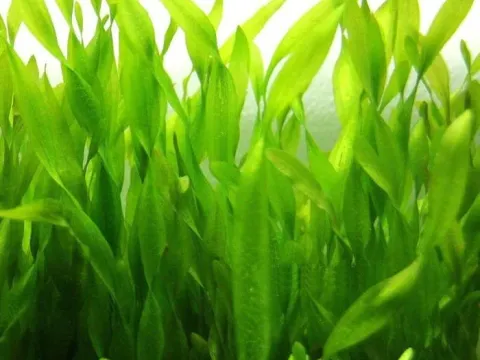
Vallisneria denseserrulata
Vallisneria denseserrulata
Vallisneria denseserrulata is a perennial submerged aquatic plant belonging to the Hydrocharitaceae family. It is recognized for its dense serrated leaf margins, which distinguish it from other species within the genus.
What the section contains
Vallisneria denseserrulata
In agricultural and commercial settings, this plant is propagated primarily through vegetative reproduction, where runners (stolons) extend from the mother plant to establish new daughter rosettes.
Planting involves placing the root system into a nutrient-dense, permeable substrate, ensuring that the crown of the plant remains above the sediment level to prevent rot.
Optimal planting density is crucial to facilitate rapid expansion across the aquatic area, as overcrowding can restrict individual growth rates and limit access to nutrients.
The reproduction cycle is most active during periods of stable temperature and adequate light, making controlled environment facilities ideal for year-round propagation.
This species thrives in tropical to subtropical climates, requiring water temperatures between 20 and 28 degrees Celsius for optimal metabolic and photosynthetic activity.
The substrate should be rich in organic matter and iron, with a slightly acidic to neutral pH range, as the plant relies on its roots to absorb a significant portion of its essential nutrients.
High light intensity is essential for the healthy development of Vallisneria denseserrulata; insufficient light will lead to thin, pale, and elongated leaves that lose their structural integrity.
The water chemistry should be maintained with low turbidity, as suspended particles can settle on the leaves, severely hindering the gas exchange necessary for photosynthesis.
Supplementary carbon dioxide (CO2) injection is highly recommended in professional setups to accelerate growth rates and enhance the overall resilience of the plant biomass.
The yield of Vallisneria denseserrulata is measured by the biomass production of healthy rosettes, which can be significant under optimized hydroponic or aquatic farming conditions.
Regular maintenance, including selective harvesting of excess runners, promotes the continued production of new shoots, ensuring a consistent supply of planting material.
Beyond aesthetic value, the plant is valued for its high uptake of nitrates and phosphates, effectively acting as a natural filtration system in aquaponic and aquaculture operations.
Industrial output depends heavily on the maintenance of water quality parameters, including the balance of trace elements such as potassium and micro-nutrients.
The commercial application of this crop spans from aquarium decoration and botanical research to its role in bio-remediation of water in closed-loop systems.
Bacterial decay is a primary concern, often triggered by stagnant water conditions or sudden fluctuations in temperature that weaken the plant's natural defenses.
Herbivorous aquatic organisms, including specific species of snails and fish, can cause mechanical damage to the leaf tissue, which may lead to secondary fungal infections.
Algal blooms pose a severe threat, as they compete for available light and nutrients, often smothering the Vallisneria plants and inhibiting their ability to perform photosynthesis.
Chemical treatments used to eradicate unwanted pests must be carefully selected, as Vallisneria denseserrulata is sensitive to many common aquatic herbicides and pesticides.
Effective management focuses on preventive strategies, such as strict quarantine procedures for new stock and the constant monitoring of water chemistry to prevent stress-induced diseases.