
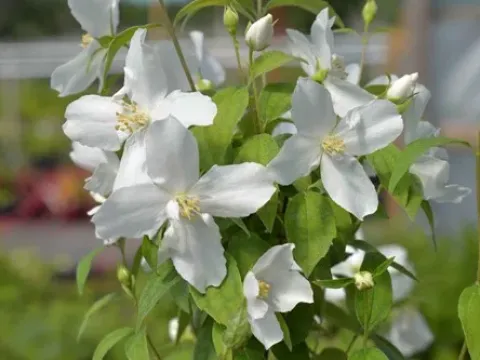
Himalayan mock orange
Philadelphus triflorus
The Himalayan mock orange (Philadelphus triflorus) is a deciduous shrub belonging to the Hydrangeaceae family. Native to the Himalayan region, this plant is valued for its elegant white flowers and distinct fragrance, making it a popular choice for landscape design.
What the section contains
Himalayan mock orange
The species thrives in bright, sunny locations. While it exhibits some tolerance for partial shade, full exposure to sunlight is essential for optimal flower production and the development of a dense, healthy branch structure.
Regarding soil requirements, this shrub prefers fertile, well-draining soils with a slightly acidic to neutral pH. Proper drainage is vital, as the root system is susceptible to rot when exposed to waterlogged conditions for extended periods.
Climatic adaptability is moderate; the plant requires consistent moisture during the growing season. In cooler climates, providing a layer of mulch around the base of the plant helps retain soil moisture and protect the root system from freezing temperatures during winter.
Maintenance includes an annual pruning cycle. Removing old and overcrowded stems encourages new growth and keeps the shrub vigorous. It is recommended to perform this maintenance immediately after the flowering period to allow the plant enough time to set buds for the following year.
Aphids are the most frequent pests affecting the Himalayan mock orange. These insects typically cluster on the tender tips of new growth, causing curling and stunted development. Applying insecticidal soap is usually effective for early-stage infestations.
Fungal issues, such as powdery mildew, may occur if the plant is grown in an environment with poor air circulation or high humidity. Proper spacing between shrubs is the most effective preventative measure against such diseases.
Spider mites can become a problem during hot, dry weather conditions. They suck moisture from the leaves, resulting in stippling and discoloration. Regular overhead watering or misting can help deter these pests during particularly dry spells.
Leaf spots caused by various pathogens can appear on the foliage if the plant remains wet for too long. Removing and disposing of infected leaves can help limit the spread of the disease across the shrub and neighboring plants.
Root rot, driven by stagnant water, is a significant threat to long-term plant health. Ensuring that the soil structure is friable and that there is an adequate drainage system beneath the planting hole is essential for preventing this fatal condition.