
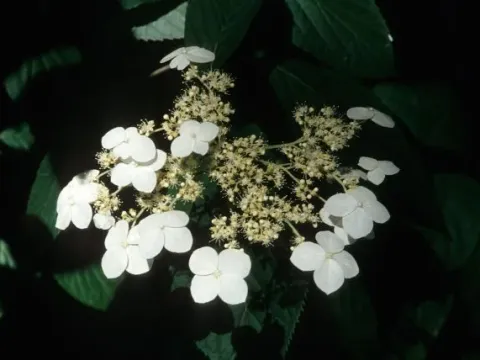
Himalayan hydrangea
Hydrangea heteromalla
Himalayan hydrangea (Hydrangea heteromalla) is a deciduous shrub species belonging to the Hydrangeaceae family. It is native to the mountain regions of the Himalayas, China, and northern India, typically thriving in moist forest margins.
What the section contains
Himalayan hydrangea
The plant features broad, dark green elliptical leaves with a distinct, dense pubescence on the underside, providing a unique texture. During the summer, it produces large, flat-topped corymbs of creamy-white flowers.
For successful cultivation, the plant requires rich, moist, and well-drained soil with a slightly acidic pH level. It performs best in partial shade, as intense direct sun can scorch its broad leaves.
Watering requirements are relatively high; the soil should never be allowed to dry out completely. Mulching is essential to maintain root cool and prevent excessive evaporation during summer months.
Garden placement should be sheltered from harsh, dry winds which can damage delicate young shoots. It is a hardy species, but it benefits significantly from a protected position in landscape design.
The most significant pathological threats to the Himalayan hydrangea include fungal infections such as powdery mildew and grey mold, often exacerbated by stagnant air and high humidity.
Chlorosis is a frequent issue if the soil pH rises above the optimal range, preventing the plant from absorbing necessary micronutrients like iron effectively.
Pests including aphids and spider mites are common in dry weather conditions. These insects target the younger, more succulent parts of the plant and require active management.
Integrated pest management, including regular inspection and the use of insecticidal soaps, is highly effective for controlling minor infestations before they become critical.
Sanitation practices, such as removing dead foliage and pruning away diseased wood in the early spring, play a crucial role in preventing the overwintering of pathogens.