
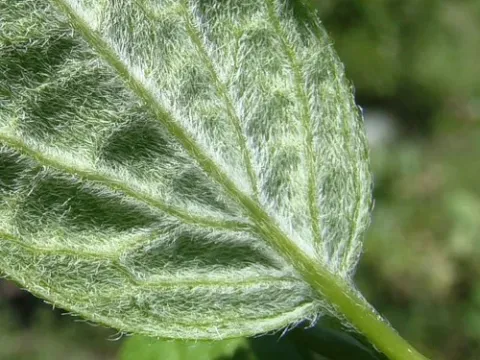
Hairy mock orange
Philadelphus incanus
The Hairy mock orange (Philadelphus incanus) is an ornamental deciduous shrub belonging to the Hydrangeaceae family. Its native range is located in the mountainous regions of China, where it typically inhabits forest margins.
What the section contains
Hairy mock orange
This species requires a site with full sun or partial shade to ensure prolific blooming. The soil should be fertile, moist, and well-drained, as the plant is highly sensitive to waterlogging which can lead to root damage.
In terms of climatic adaptation, it prefers temperate environments and requires winter protection in regions prone to severe frost. Soil pH should ideally be near neutral to slightly acidic for optimal nutrient absorption.
Cultivation practices involve regular irrigation throughout the growing season and periodic mulching. Pruning is essential to remove old, woody stems, which promotes the growth of vigorous new shoots and enhances flowering density.
Its primary use is in landscaping as a specimen plant or in flowering shrub borders, providing an elegant aesthetic during the late spring and early summer flowering window.
Aphids are the most common pests affecting Philadelphus incanus, often congregating on the succulent new growth and causing leaves to curl.
Powdery mildew is a prevalent disease that appears as a white dusty coating on the foliage, typically occurring in environments with poor air circulation.
Leaf spot infections can occur during periods of prolonged humidity, which may result in premature leaf drop if not managed correctly with fungicide applications.
Scale insects can occasionally infest the branches, leading to weakened growth and the need for horticultural oil treatments during the dormant season.
To mitigate these threats, it is recommended to space plants adequately and maintain a clean garden environment by removing fallen leaves and debris.