
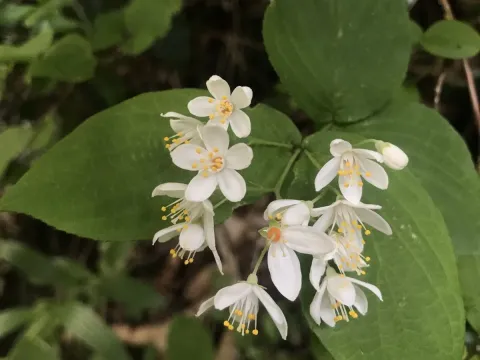
Fuzzy deutzia
Deutzia scabra
Fuzzy deutzia (Deutzia scabra) is a deciduous flowering shrub belonging to the Hydrangeaceae family. Originally native to Japan and China, this plant has become a popular choice for gardens and landscaping across various temperate regions worldwide.
What the section contains
Fuzzy deutzia
The plant thrives in sunny locations that are sheltered from harsh winds. It prefers fertile, well-draining loamy soils with a neutral or slightly alkaline pH level. Ensuring proper drainage is crucial, as the plant is highly susceptible to root rot if water remains stagnant around the roots.
Botanically, it is known for its rough, sandpaper-like leaves, which give the plant its common name. The shrub typically grows to a height of 1.5 to 2.5 meters, featuring abundant clusters of white or pinkish blossoms that emerge in late spring or early summer.
Agricultural management requires consistent irrigation during hot, dry spells and annual fertilization to support lush growth. Pruning should be performed immediately after the flowering period to encourage the development of vigorous new stems for the following season's blooms.
In landscaping, Fuzzy deutzia is valued for its versatility and aesthetic appeal. It is commonly used as a specimen plant, in mixed borders, or for creating informal hedge rows in parks and private garden designs.
The most frequent pest encountered by gardeners growing Deutzia scabra is the aphid. These small insects tend to feed on succulent new growth and flower buds, potentially causing distortion and stunted development if left untreated.
Leaf-eating insects may also occasionally damage the foliage. A combination of horticultural oils or approved insecticidal soaps is generally effective in managing these pest populations without causing significant harm to the shrub's health.
While the plant is relatively robust, poor airflow in damp, humid conditions can encourage the development of fungal leaf spots. Proper spacing and location selection are key preventive strategies to maintain a healthy foliage structure.
Sanitation practices, including the removal of dead or crossing branches, reduce the risk of localized infections. Maintaining vigorous plant growth through balanced nutrition is one of the best defenses against typical garden pathogens.
Regular monitoring of the shrub during the active growth phase allows for early detection of potential threats. When managed properly, Fuzzy deutzia remains a low-maintenance and highly rewarding plant for any professional landscape or home garden.