
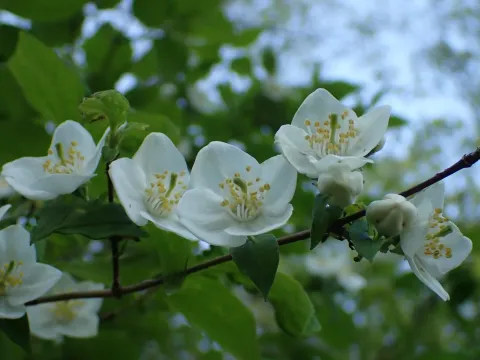
Hairy mock orange
Philadelphus hirsutus
The hairy mock orange (Philadelphus hirsutus) is a deciduous shrub species belonging to the Hydrangeaceae family. Native to the southeastern United States, it is widely recognized for its unique texture and elegant flowering habit in garden landscapes.
What the section contains
Hairy mock orange
Cultivation requires well-drained, fertile soil with an optimal pH range that supports vigorous growth. Although the shrub is adaptable, it thrives best when provided with consistent moisture during the growing season while ensuring the roots do not remain waterlogged.
In terms of climatic requirements, this species prefers sites with plenty of natural light, though it tolerates partial shade. The shrub is hardy and can withstand various environmental stresses if planted in a location protected from cold, drying winter winds.
Botanically, Philadelphus hirsutus is distinguished by the dense, hairy pubescence covering its branches and leaf undersides. Its growth habit is typically upright, making it an excellent candidate for formal shrub borders or naturalized garden areas.
The primary economic use of this plant is in the nursery and ornamental sector. It is prized by landscape architects for its aesthetic appeal, contributing to biodiversity in urban parks and providing shelter for beneficial pollinating insects.
The most common insect pests affecting this shrub include aphids and spider mites, which typically target new growth during hot, dry weather. Monitoring and applying insecticidal soaps can effectively manage these populations early in the season.
Fungal issues such as leaf spot are frequently observed in environments with high humidity and poor air circulation. Proper spacing between plants and regular pruning are essential practices to mitigate these persistent fungal threats.
Root rot caused by poor soil drainage remains a significant risk factor for the species. Maintaining high soil health and avoiding over-irrigation are critical components of a successful agricultural management plan for this mock orange variety.
To minimize disease pressure, ensure that all gardening tools are cleaned and disinfected before and after pruning operations. This simple measure effectively prevents the mechanical transmission of harmful pathogens between woody plants.
Overall plant vitality is key to disease resistance; therefore, a balanced fertilization program should be implemented. Providing adequate nutrients enables the shrub to overcome minor infestations and environmental stress more effectively.