
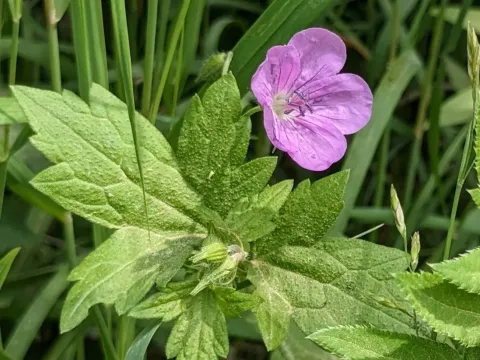
Geranium maximowiczii
Geranium maximowiczii
Geranium maximowiczii can be propagated through seeds or division of the rootstock. Sowing seeds directly into the open ground during the autumn ensures natural stratification.
What the section contains
Geranium maximowiczii
For spring sowing, seeds require a cold treatment period of at least 60 days to break dormancy and ensure uniform germination across the tray or seedbed.
Vegetative propagation is the most reliable method. Dividing the root clump in early spring or late August allows for the establishment of vigorous, healthy plants.
Ensure each division contains a portion of the rhizome and several healthy growth buds to facilitate rapid root development after replanting into prepared soil.
Planting density should be carefully managed; spacing of 30 to 40 centimeters is recommended to provide adequate airflow and prevent overcrowding of the mature plants.
As a member of the Geraniaceae family, this species is native to the temperate regions of the Far East, specifically occurring in Russia, China, and Korea.
The plant thrives in well-drained, fertile soils with a neutral or slightly acidic pH, which mimics the forest edge environments of its native habitat.
It is a highly hardy perennial capable of withstanding harsh winter temperatures, making it a low-maintenance choice for temperate climate landscaping.
While the plant is tolerant of partial shade, it reaches its full potential in terms of flowering and foliage density when exposed to full sun for part of the day.
Consistent moisture is beneficial, but the species is sensitive to waterlogged conditions, which necessitates the use of a soil structure with high porosity.
Powdery mildew is the most common fungal issue, particularly in humid or stagnant air conditions, resulting in a white, dusty layer on the leaf surfaces.
Root rot, often caused by pathogens like Pythium or Phytophthora, frequently appears when drainage is inadequate and soil moisture remains excessively high.
Aphids and spider mites are typical pests that infest the plant during hot, dry spells, potentially causing foliage deformation and loss of vigor if untreated.
- Monitor foliage regularly for signs of chlorosis or leaf curling.
- Apply fungicide sprays only when environmental conditions favor fungal spread.
- Use insecticidal soaps to manage early aphid populations effectively.
Good cultural practices, including the removal of dead leaves and deadheading flowers, are essential to minimize the risk of pest and disease outbreaks.