
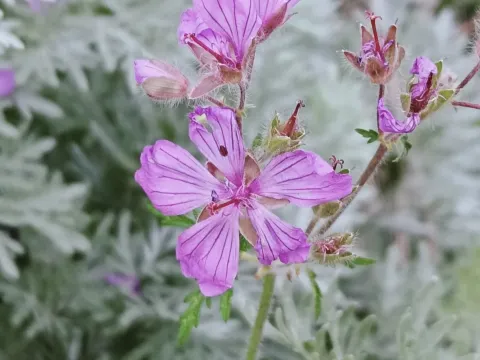
Geranium malviflorum
Geranium malviflorum
Geranium malviflorum, a member of the Geraniaceae family, is propagated through seeds or division of established rhizomes. Seeds should be sown in prepared nursery trays during late winter or early spring to ensure a head start on the growing season before transplanting.
What the section contains
Geranium malviflorum
The substrate for sowing must be light, well-draining, and rich in organic matter to support healthy seedling development. Germination typically occurs within two to three weeks under consistent moisture and stable temperatures of 18–20°C.
Seedlings require thinning and eventual transplanting into individual pots to encourage robust root growth. Proper spacing during the initial growth phase is essential to prevent etiolation, as the young plants need significant light exposure.
Hardening off the seedlings is a critical procedure before permanent planting in the field. This process gradually exposes the plants to external environmental conditions, reducing transplant shock and ensuring better survival rates.
Direct sowing in the garden is possible in milder climates during autumn. This allows for natural vernalization, which improves the uniformity and vigor of the emerging plants when spring temperatures rise.
This species thrives in well-drained, fertile soil with a neutral to slightly acidic pH. Waterlogging is detrimental to this plant, as it leads to root decay, so improving heavy soils with grit or organic compost is highly recommended.
The plant performs best in full sun to light shade. In regions with intense summer heat, light afternoon shade helps preserve the color of the flowers and prevents the foliage from scorching during prolonged drought periods.
Climate adaptability is one of the key features of Geranium malviflorum. It is hardy enough to survive temperate winters, provided the soil remains free of excessive standing water, which could freeze and damage the crown.
Regular irrigation is needed during the establishment phase, but mature plants exhibit moderate drought tolerance. Watering should be directed at the base to keep the foliage dry and reduce the likelihood of fungal infections.
Maintenance involves seasonal pruning to encourage secondary blooming and to remove spent flower stalks. Applying a balanced fertilizer in the early spring supplies the necessary nutrients for sustained vegetative growth.
Powdery mildew represents the most significant fungal threat, especially in conditions of poor air circulation and high humidity. Proactive maintenance, such as ensuring proper spacing between plants, is the primary line of defense.
Rust diseases can also manifest, causing orange-brown pustules on the undersides of leaves. Removing infected foliage and applying preventative copper-based fungicides effectively manages the spread of these pathogens in garden settings.
Pests such as aphids and spider mites can colonize the soft tissues of the stems and leaves during dry, hot spells. Monitoring for signs of leaf yellowing or stunted growth is essential for timely intervention with horticultural soaps.
- Regular removal of weeds to reduce competition for nutrients.
- Application of mulch to maintain consistent soil moisture levels.
- Use of biological control agents to manage aphid populations.
Slugs and snails can cause cosmetic damage to the plant's foliage. Applying physical barriers or bait traps is standard practice to protect the plants during their most vulnerable growth stages in early spring.