
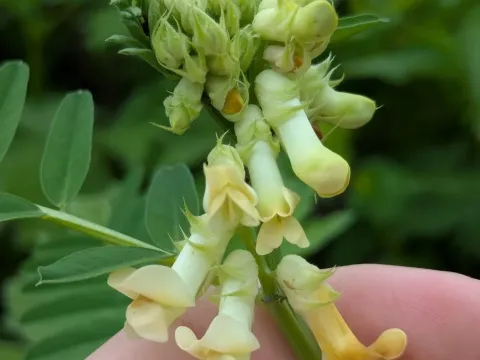
Balansa vetch
Vicia balansae
Balansa vetch (Vicia balansae) is an annual legume species typically planted in early spring. Optimal seeding timing is essential to ensure that the plants utilize early-season soil moisture efficiently, which is a critical factor for establishing a robust vegetative canopy during the initial growth stages.
What the section contains
Balansa vetch
In regions with mild winters, autumn sowing can be a viable strategy to ensure early availability of green biomass in the following growing season. Planting is generally performed in rows with 15 cm spacing, which is standard for most vetch species to maintain optimal plant density and yield.
The depth of sowing should be adjusted based on soil texture and moisture content. In light sandy soils, seeds are placed 4–6 cm deep, whereas in heavier clay soils, the depth should be reduced to 3 cm to facilitate rapid emergence and ensure consistent stand establishment.
For improved atmospheric nitrogen fixation, inoculating the seeds with specific rhizobial strains prior to planting is highly recommended. This practice ensures the formation of effective root nodules, significantly increasing the plant's nutrient uptake efficiency.
Seeding rates vary depending on the intended use: 100–120 kg per hectare is standard for high-yield fodder production. Lower rates are often employed for seed crops to ensure proper aeration of the canopy and reduce the risk of lodging during the final stages of maturity.
Balansa vetch thrives in well-drained, fertile soils with a neutral or slightly acidic pH. The species is highly sensitive to waterlogging and poor drainage, which can lead to root rot and significant stand losses, making site selection crucial for successful cultivation.
The crop prefers a moderate climate for optimal development. Germination typically begins at soil temperatures of +5 to +8 degrees Celsius, while active vegetative growth is most rapid under temperatures ranging from +18 to +22 degrees Celsius.
While exhibiting moderate drought tolerance, consistent moisture availability is necessary during the flowering and pod-filling phases to achieve maximum biomass yield. Severe moisture deficits during these critical growth stages will negatively impact both fodder quality and seed set.
Adequate levels of phosphorus and potassium are necessary to support healthy growth and reproductive success. Excessive nitrogen application should be avoided, as it can inhibit the nitrogen-fixing activity of root bacteria, leading to a reliance on soil nitrogen rather than symbiotic fixation.
A firm, weed-free seedbed is essential for this crop. Because it competes poorly with weeds in the early stages, thorough field preparation before sowing is required to ensure that the young vetch plants establish themselves without excessive competition for light and nutrients.
The biomass yield of Balansa vetch is highly responsive to favorable soil conditions and adequate rainfall, with potential yields ranging from 200 to 300 centners per hectare. This makes it a valuable asset in rotation cycles aimed at soil health and livestock feed production.
Seed production typically ranges from 10 to 15 centners per hectare, provided that pest pressure is managed and pollination conditions are favorable during the flowering period. Proper crop management is essential to maximize the harvestable seed yield.
Nutritionally, Balansa vetch is highly regarded due to its significant protein content, often exceeding 20% in dried forage. This high nutritional profile makes it an excellent choice for balancing livestock diets and improving overall animal performance.
As a green manure crop, Balansa vetch is proficient at nitrogen accumulation, which improves the soil structure and fertility for following cereal or vegetable crops. The rapid decomposition of its residues ensures that nutrients are readily available for the subsequent rotation.
To prevent lodging and improve harvest efficiency, vetch is often grown in combination with cereal crops like oats or barley. These act as a trellis system, keeping the vetch stems upright and simplifying both harvesting and subsequent processing.
Root rot is a common threat, particularly in poorly drained or waterlogged soils. This disease can cause widespread seedling mortality, emphasizing the importance of crop rotation and the selection of well-drained fields to maintain healthy stands over time.
Foliar diseases such as anthracnose and ascochyta blight can impact the crop during periods of high humidity. These diseases appear as lesions on leaves and stems, leading to reduced photosynthetic capacity and diminished quality of the produced fodder.
Pests, particularly pea leaf weevils, pose a risk to young seedlings by feeding on the leaves and root nodules. Early detection and, if necessary, chemical intervention are vital to protecting the nitrogen-fixing potential of the crop from an early stage.
Seed-boring beetles (Bruchus species) can severely impact seed quality by consuming the interior of the pods. This requires stringent seed storage protocols, including fumigation and cool storage, to ensure that harvested seeds remain viable for future sowing seasons.
- Use of certified, disease-free seed lots.
- Field monitoring for aphid and weevil populations during vegetative growth.
- Implementing spatial isolation from other legume crops to mitigate disease spread.
Harvesting for green fodder should occur at the onset of flowering, which marks the peak of nutritional value. Delaying the harvest leads to increased fiber content and stem lignification, which reduces the palatability and overall digestibility for livestock.
When harvesting for hay, proper drying procedures are critical to minimize leaf loss. Since the leaves contain the highest concentration of vitamins and protein, gentle handling during the wilting and baling process is essential to ensure high-quality feed.
Seed harvesting should be performed when the pods are brown and dry. Careful timing is needed to prevent shattering, as vetch pods are prone to splitting under dry conditions, potentially leading to substantial harvest losses if left in the field too long.
Desiccation of the crop prior to mechanical harvesting can lead to more uniform maturity and cleaner yields. This practice is especially recommended in larger fields where uneven ripening could otherwise result in significant delays and harvest inefficiencies.
Following harvest, seeds must be cleaned of debris and dried to a moisture content of 13-14% for long-term storage. Maintaining these conditions is vital for preventing the development of mold and ensuring that the germination capacity of the seeds is preserved.