
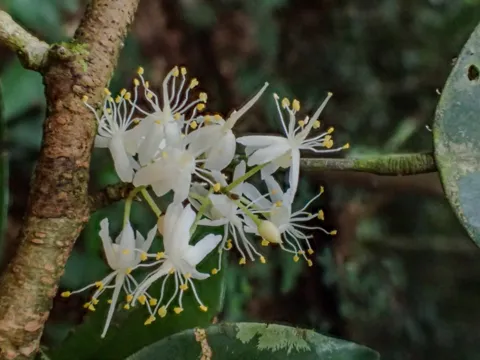
Baphiopsis
Baphiopsis
Baphiopsis is a genus of plants belonging to the Legume family (Fabaceae), comprising a limited number of woody species native to tropical regions. These trees are characteristic representatives of the equatorial African flora, where they thrive in humid tropical forest environments.
What the section contains

Baphiopsis
Botanically, Baphiopsis is characterized as an evergreen tree or tall shrub featuring pinnate leaves and flowers typical of the Faboideae subfamily. The wood produced by these trees is known for its high density, making it a subject of interest for localized forestry practices.
Successful cultivation of Baphiopsis requires consistently high temperatures throughout the year with minimal diurnal fluctuations. The optimal temperature range for development is between 22 and 28 degrees Celsius, accompanied by high relative humidity levels.
The plant prefers deep, well-drained red soils or lateritic soils rich in organic matter. Baphiopsis is highly sensitive to waterlogging at the root zone, necessitating planting sites with natural drainage or engineered soil management systems to prevent root rot.
Agronomic management of Baphiopsis focuses primarily on maintaining appropriate light conditions within the plantation. Young specimens require significant shade during their initial growth years, as they are evolutionarily adapted to the understory and middle canopy layers of tropical rainforests.
The primary threats to this culture in its natural habitat include fungal diseases affecting the root system, which are often triggered by excessive soil moisture. Additionally, stems may be susceptible to damage from wood-boring insects, which typically target trees with compromised health or weakened immune responses.