
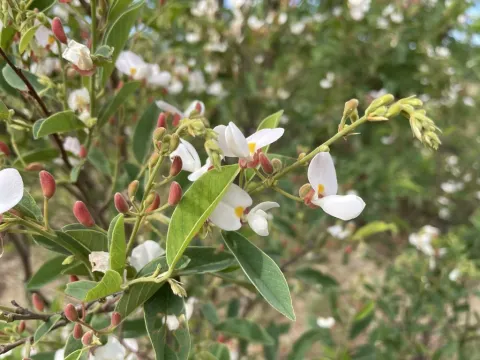
Baphia
Baphia
Baphia is a genus of flowering plants belonging to the Fabaceae family, native to tropical Africa and Madagascar. These plants primarily grow as shrubs or small trees, characterized by their dense foliage and unique botanical structure.
What the section contains


Baphia
The cultivation of Baphia requires a tropical climate with high temperatures and consistent rainfall. The plant thrives in environments where frost is non-existent, ensuring steady growth throughout the year without thermal stress.
Well-drained, fertile soil is crucial for the optimal development of Baphia species. They prefer slightly acidic to neutral soils that provide sufficient nutrient uptake while preventing waterlogging, which is a major limiting factor for their survival.
Good agricultural practices for Baphia include periodic pruning to maintain tree health and ensure light penetration. Given their growth habits, spacing should be carefully calculated to avoid competition for resources between individual trees in a plantation.
Economically, Baphia is highly valued for its durable and hard wood, historically referred to as camwood. It is utilized in fine woodworking, the production of traditional musical instruments, and the extraction of deep red natural dyes.
Common phytosanitary threats to Baphia include foliar fungal diseases which proliferate in humid, shaded environments. Maintaining proper canopy spacing is essential to reduce humidity levels and prevent the spread of fungal spores.
Wood-boring insects represent a significant risk to the commercial viability of Baphia plantations. Regular inspections and the removal of dying or weak trees are necessary to control pest populations and protect the harvest quality.
Root-knot nematodes can severely affect young Baphia saplings, particularly in sandy soils. Implementing strict nursery sanitation and using resistant rootstocks are recommended strategies to mitigate nematode impact.
Leaf-eating larvae can cause significant defoliation, particularly during the rainy season. Biological control agents, such as beneficial predatory insects, are often preferred over chemical applications to maintain ecological balance.
Environmental stress, such as prolonged drought or extreme soil compaction, can weaken the immune system of the plant, making it more susceptible to secondary bacterial infections. Soil management and irrigation optimization are key preventive measures.