
Partridge pea
Chamaecrista fasciculata
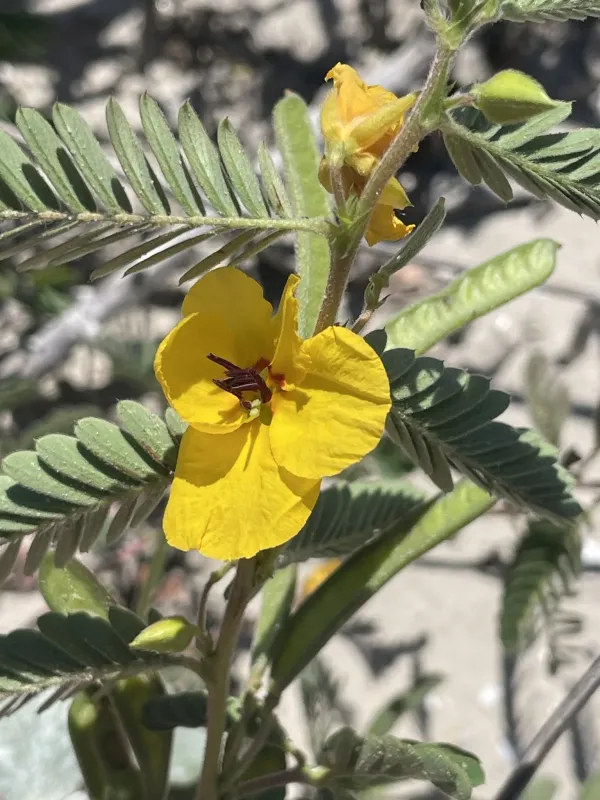
Description
Sowing dates
Partridge pea is an annual herbaceous plant belonging to the Fabaceae family. As a heat-loving crop, seeding is performed in the spring once soil temperatures reach a stable 15–18 degrees Celsius.
To ensure successful germination, seeds require stratification or scarification, which significantly improves field emergence rates. In temperate regions, sowing is typically carried out in rows spaced 30–45 centimeters apart.
The optimal seeding depth is 1–2 centimeters, as the plant is sensitive to soil resistance during the emergence phase. The ideal time for planting is after the risk of late spring frosts has passed and warm weather is well established.
Seeding density varies based on the intended use: higher densities are preferred for biomass production, while wider spacing is utilized for seed harvesting.
Seedlings emerge relatively slowly, necessitating vigilant weed management during the early vegetative stages to prevent competition.
Growing requirements
The crop thrives in well-lit areas with light, sandy, or sandy-loam soils that possess excellent drainage. It adapts well to nutrient-poor soils due to its ability to fix atmospheric nitrogen through a symbiotic relationship with rhizobia bacteria.
Soil pH should ideally be in the slightly acidic to neutral range. Partridge pea demonstrates resilience to temporary drought conditions owing to a robust root system that accesses deep soil moisture.
The plant is highly sensitive to waterlogging and heavy clay soils prone to compaction. During the active growth period, the crop requires sufficient warmth, as development slows significantly if temperatures drop below 10 degrees.
Mineral nutrition should be balanced, focusing on phosphorus and potassium; excessive nitrogen fertilization may inhibit the effectiveness of the symbiotic bacteria.
To optimize crop performance, it is crucial to ensure adequate aeration of the root zone through regular cultivation between rows.
Main diseases and pests
The primary diseases affecting Partridge pea are fungal infections, such as root rots caused by excessive soil moisture. Powdery mildew may also occur if humidity levels remain high in dense plant stands.
Among pests, weevils and various species of cutworms pose the most significant threat, as they can severely reduce foliage and plant vigor.
During the flowering stage, the crop can be targeted by aphids feeding on succulent shoots. To minimize these risks, it is recommended to implement proper crop rotation and use high-quality, treated seed.
Disease management involves the application of fungicides upon the first sign of infection, although priority should always be given to preventative measures and maintaining proper moisture levels.
Monitoring for natural predators helps keep pest populations under control without relying heavily on aggressive chemical crop protection agents.