
Parkia javanica
Parkia javanica
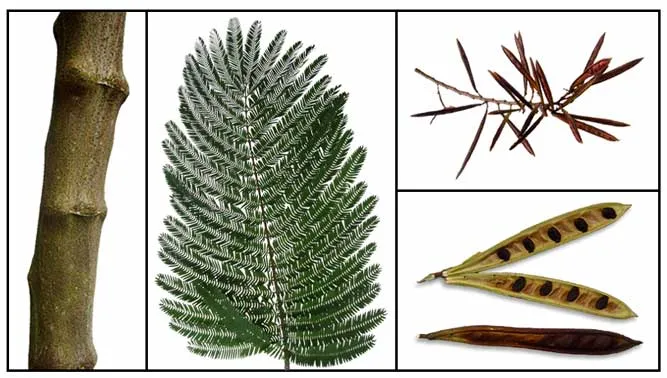
Description
Sowing dates
Propagation of Parkia javanica is primarily achieved through seeds. Due to the hard seed coat, pre-treatment such as scarification or soaking in warm water is necessary to improve and accelerate germination rates.
Seeds are typically sown in nursery beds with well-drained soil substrates. Germination occurs within two to four weeks, and young seedlings require partial shade to protect them from intense sunlight during the early developmental stage.
Transplanting into the permanent site is recommended at the start of the rainy season, allowing the root system to establish itself before the onset of the drier months.
When planting, it is crucial to provide sufficient spacing of at least 8 to 10 meters between trees, considering the wide canopy and expansive root system of mature specimens.
Initial maintenance requires regular watering and keeping the area around the base of the seedling free from weeds to ensure that the young tree is not outcompeted for nutrients.
Growing requirements
Parkia javanica is a strictly tropical species that thrives in regions with warm, humid conditions. It prefers a year-round temperature range between 22 and 30 degrees Celsius.
The tree is sensitive to frost and cold climates, which strictly limits its successful cultivation to tropical zones at elevations ranging from sea level up to 1000 meters.
Deep, fertile, and well-drained soils are essential for healthy growth. Waterlogged conditions must be avoided as they can cause severe stress and root rot in the plant.
As a member of the Fabaceae family, it forms symbiotic relationships with nitrogen-fixing bacteria, contributing significantly to soil fertility improvement in agroforestry systems.
Full sun exposure is required for mature trees to produce high yields of pods and maintain a robust canopy structure throughout the growing season.
Yield
Productivity begins once the tree reaches maturity, typically between 6 and 8 years after planting. The yield increases steadily as the tree expands its size and canopy density.
The fruit consists of long pods containing seeds embedded in a fleshy pulp. These pods are generally harvested for their seeds, which hold significant importance in local food traditions.
Total yields are highly dependent on environmental factors such as soil nutrient availability, rainfall patterns, and the overall management practices applied to the orchard or forest plot.
Beyond the edible seeds, the tree is often integrated into mixed systems to maximize land use efficiency and provide ecological benefits such as shade and wind protection.
Applying organic mulch and ensuring a balanced nutrient supply can help stabilize yield fluctuations across different growing seasons.
Main diseases and pests
Fungal infections, particularly root rot, represent a primary threat, especially in areas where drainage is insufficient. Such infections can be lethal if not managed early.
Insects, including various types of weevils and caterpillars, often target the developing pods and leaves, which can significantly reduce both the quantity and quality of the harvest.
Integrated Pest Management (IPM) strategies are recommended to mitigate damage without relying heavily on chemical inputs that could disrupt the local ecosystem.
Mechanical damage to the trunk or branches during maintenance can serve as an entry point for pathogens, highlighting the need for careful handling during pruning.
- Maintenance of proper soil drainage to prevent fungal growth.
- Regular monitoring of canopy health to detect pest infestations.
- Prompt removal of fallen debris and damaged plant material.
Harvesting
Harvesting Parkia javanica is a manual process. Due to the significant height of the tree, laborers often utilize ladders or long-reach tools to access the pods located in the upper canopy.
The timing of the harvest is critical; pods should be collected when they reach physiological maturity, marked by a characteristic change in texture and color.
Once harvested, the pods are processed to extract the seeds. These seeds are then either prepared for immediate culinary use or subjected to traditional fermentation techniques.
Storage of the harvested material requires cool and dry conditions to inhibit mold development, as the high organic content of the seeds makes them susceptible to spoilage.
The harvest season generally aligns with the end of the rainy period, ensuring that the fruit is collected under conditions that prevent premature rotting on the tree.