
Parkia timoriana
Parkia timoriana
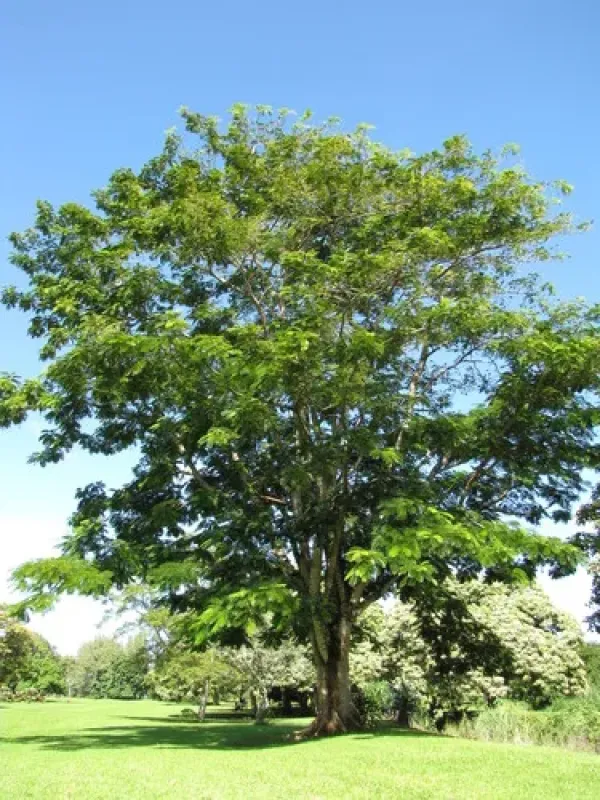
Description
Sowing dates
Parkia timoriana is primarily propagated by seeds in nurseries to ensure a high success rate before transplanting into the field.
The seeds possess a hard coat and require scarification or soaking in warm water to facilitate rapid and uniform germination.
The ideal time for field planting is the start of the rainy season, which provides the necessary moisture for the trees to establish their root systems.
Saplings should be kept in nurseries for 6 to 12 months, reaching a height of about 50 cm before they are sufficiently hardy for forest environments.
Proper weed management around the base of the saplings is crucial during the first two years to prevent competition for light and nutrients.
Growing requirements
Parkia timoriana, a member of the Fabaceae family, is a large, fast-growing deciduous tree that thrives in tropical lowland environments.
It prefers deep, fertile, and well-drained soils; however, it demonstrates significant adaptability to various soil types found in its native habitat.
The species requires a humid tropical climate with abundant annual rainfall and year-round warm temperatures to maintain its fast growth rate.
As a light-demanding species, it performs best in full sunlight and is typically planted in open areas or low-density mixed plantations.
The tree is sensitive to strong winds, which can break branches due to the wood's density and the tree's overall structure, requiring sheltered sites.
Yield
The primary utility of Parkia timoriana lies in its production of high-quality timber, which is light, easy to work with, and suitable for interior construction.
The tree's ability to fix atmospheric nitrogen makes it an excellent candidate for soil restoration and sustainable agroforestry practices.
The seeds and pods are often consumed by local communities, providing a non-timber forest product that adds value to the cultivation cycle.
Foliage from this tree is frequently used as livestock fodder, helping farmers integrate crop and animal production systems effectively.
Rapid biomass accumulation allows for a relatively short rotation period for timber, making it economically attractive for small-scale forestry.
Main diseases and pests
Insects that target developing pods and seeds are the most significant threats, potentially reducing the viable seed crop by a substantial margin.
Young trees are susceptible to various leaf-chewing insects, which can temporarily retard growth but are rarely fatal to healthy, established plants.
Fungal pathogens associated with high humidity and poor site drainage can lead to root rot or leaf spots, affecting the tree's long-term health.
Stem borers can be a problem in stressed trees, creating entry points for secondary infections and potentially weakening the structural integrity of the timber.
- Regular monitoring for signs of infestation.
- Selection of resilient site locations with adequate drainage.
- Maintaining species diversity to limit pest outbreaks.
Harvesting
Pods are harvested manually once they reach maturity and turn brown, indicating that the seeds inside are fully developed and ready for collection.
Timber harvest involves selective cutting of mature trees, which generally reach their optimal size for use in approximately two decades.
After harvesting the pods, the seeds must be promptly removed and cleaned to prevent microbial growth and ensure the longevity of the harvest.
Dried seeds should be stored in cool, ventilated areas to maintain viability if intended for future planting or to preserve food quality.
Efficient logistics are required to move harvested timber and seed products from forest sites to processing facilities to minimize post-harvest loss.