
Parkinsonia praecox
Parkinsonia praecox
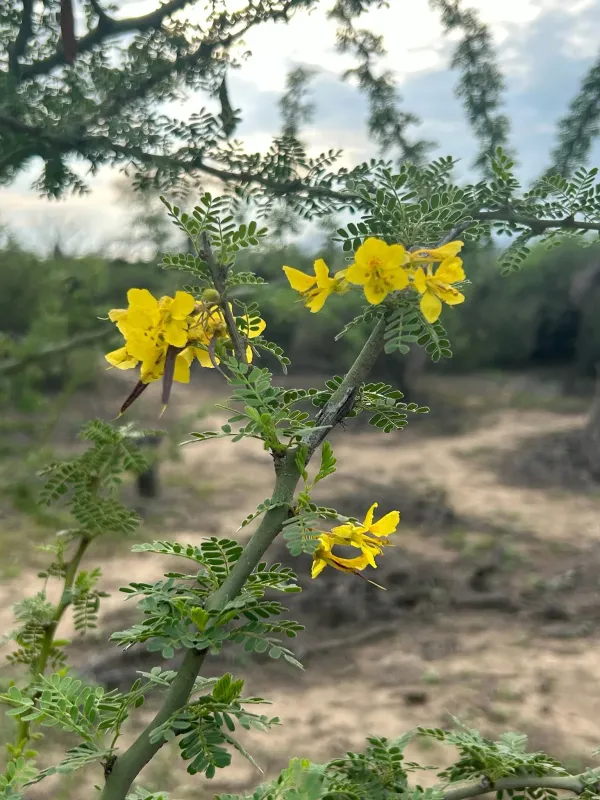
Description
Sowing dates
Propagation of Parkinsonia praecox is primarily performed through seeds. Given the hard seed coat typical for the Fabaceae family, mechanical scarification or soaking in hot water is essential to break dormancy and ensure high germination rates.
Sowing should ideally occur in the spring when ambient temperatures are consistently warm. This promotes rapid root establishment before the onset of the peak heat or winter dormancy phases.
Seeds are sown in well-draining potting medium at a shallow depth of approximately 1–2 centimeters. Maintaining uniform moisture during the germination period is critical, though overwatering must be strictly avoided.
Once seedlings have developed several true leaves, they should be gradually acclimated to full sunlight conditions. This hardening process ensures that the young plants can survive the harsh exposure of the field.
When transplanting, care must be taken to minimize root disturbance, as the plant needs to establish a strong structural foundation in the new environment as quickly as possible.
Growing requirements
Parkinsonia praecox is a highly specialized tree from the Fabaceae family, specifically evolved for arid and semi-arid environments. It serves as a vital component of desert ecosystems due to its exceptional water-use efficiency.
The species requires full sun exposure to maintain its vigorous growth. It is not shade-tolerant and will become leggy and weak if planted in areas with restricted light availability.
Regarding soil preferences, it thrives in a wide range of types, including poor, rocky, or alkaline substrates. Its ability to fix nitrogen enhances the fertility of the surrounding soil over time.
Climatic requirements focus on heat and low humidity. It is frost-tender and requires protection in regions where temperatures drop significantly below freezing for extended periods.
Watering should be managed to mimic natural cycles. While drought-tolerant, young trees benefit from supplemental irrigation during their first year to build the biomass necessary for later self-sufficiency.
Main diseases and pests
The tree is generally resilient, but excessive soil moisture and poor drainage remain the greatest threats to its health. These conditions frequently lead to root rot, which can be fatal to the plant.
Insect pests, including various boring beetles and leaf-chewing insects, may target stressed trees. Maintaining healthy growth through appropriate site selection is the best preventative strategy.
Fungal pathogens can occasionally cause leaf spots, particularly in areas with stagnant, humid air. Good spacing between trees is essential to promote airflow and minimize the risk of infection.
Mechanical damage to the bark can invite opportunistic pests and infections. Great care should be taken during any landscape maintenance near the base of the trunk to prevent wounding.
Monitoring for signs of infestation or disease is best performed seasonally, particularly after periods of irregular rainfall, to intervene before problems escalate within the plantation.
Harvesting
While Parkinsonia praecox is not a primary food crop, its biomass has potential uses in sustainable forestry and fodder production. Sustainable harvest involves selective pruning to manage canopy density and wood yield.
Harvesting of pods or seeds for propagation purposes is conducted when the fruit matures and changes color, typically in late summer or early autumn depending on the local climate.
Timber utilization is limited but possible for small-scale woodcraft or local fuel production, provided the harvest does not compromise the health or the protective role of the tree.
When pruning, it is recommended to collect trimmings to use as organic mulch, which helps retain soil moisture and suppresses weed growth around the base of the tree.
Strategic harvesting helps in shaping the tree for aesthetic and functional purposes, particularly in urban landscaping or erosion control projects where structure is paramount.