
Parkia pendula
Parkia pendula
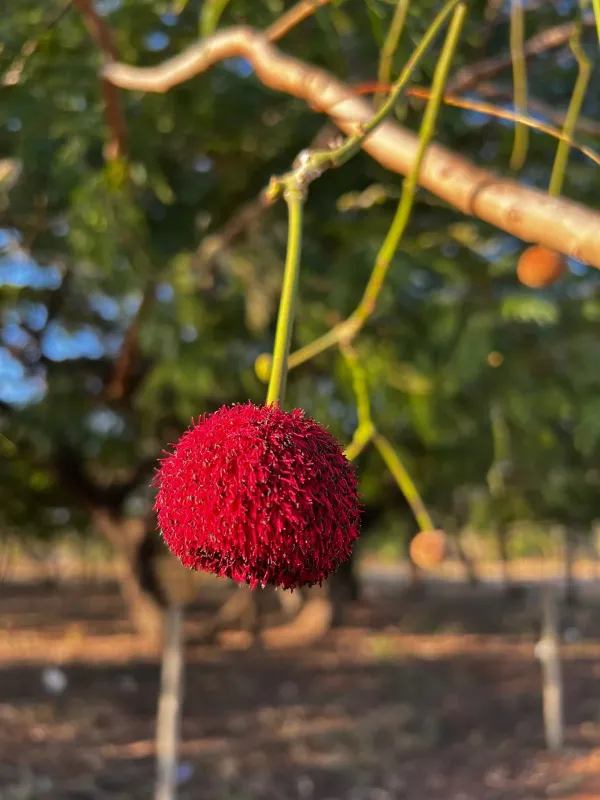
Description
Growing requirements
Parkia pendula is an impressive tropical tree belonging to the Fabaceae family, native to the rainforests of Central and South America. It is widely recognized for its long, pendant flower stalks that produce distinctive flower heads.
This species thrives in a warm, humid environment with high annual rainfall, typical of the tropical equatorial zones. It is highly sensitive to cold and requires consistent temperatures throughout the year to maintain growth.
In terms of soil, Parkia pendula prefers deep, well-drained alluvial soils that provide sufficient moisture without becoming waterlogged. Proper drainage is essential to prevent root rot, especially during the establishment phase.
The tree is considered a fast-growing species in its juvenile stages. It requires full sun exposure to reach its maximum height, which can exceed 40 meters, forming a wide and umbrella-like canopy that provides shade to the forest floor.
As a legume, it forms symbiotic relationships with nitrogen-fixing bacteria. This biological adaptation allows the tree to grow in diverse soil conditions and contribute to the enrichment of soil nutrients in tropical ecosystems.
Yield
The primary utility of Parkia pendula lies in its role in forest management and ecosystem restoration. Its ability to fix nitrogen and grow rapidly makes it a preferred candidate for reforestation projects in degraded tropical lands.
The tree provides valuable timber, which is utilized locally for construction and artisanal furniture. While not a conventional agricultural crop, its biomass production is significant, supporting local economies through sustainable harvesting practices.
Wildlife support is another critical aspect of its production. The large, nectar-rich flower heads are a key food source for various bat and insect species, which in turn are vital pollinators for the surrounding forest ecosystem.
In agroforestry systems, the tree is planted to provide shelter and shade for secondary crops. Its expansive canopy helps to regulate the microclimate at the ground level, reducing soil moisture evaporation.
The seeds and pods are often researched for their chemical properties. While large-scale industrial use is limited, traditional knowledge highlights the tree's multifaceted value in indigenous forest use.
Main diseases and pests
Fungal pathogens represent the most significant threat to the tree's health, particularly under conditions of poor drainage. These pathogens can cause stem lesions and root decay, potentially leading to the death of the specimen.
Wood-boring insects are a common pest issue. They target trees that are stressed or have physical wounds on their bark, excavating galleries that weaken the structural integrity of the main trunk.
Extreme weather events, specifically severe tropical storms, can cause mechanical breakage due to the tree's massive size and wide canopy. High winds exert significant pressure on the upper branches.
Habitat loss due to large-scale agricultural expansion and deforestation remains the greatest existential threat to natural populations of Parkia pendula in the Amazon basin.
Competition from aggressive invasive plant species and choking vines can suppress the growth of young Parkia pendula trees, requiring active management of the planting site during the early development stages.