
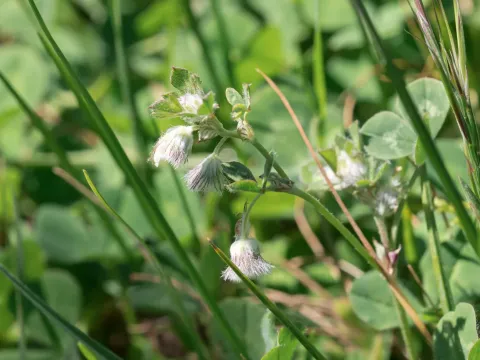
Lumpy clover
Trifolium pilulare
Trifolium pilulare, commonly known as lumpy clover, is an annual legume species belonging to the Fabaceae family. Its seeds possess hard coats, often requiring scarification to enhance germination rates before planting in agricultural settings.
What the section contains
Lumpy clover
The ideal sowing window occurs in early spring when soil moisture is abundant. Providing a firm and weed-free seedbed is essential for this small-seeded species, as it ensures proper seed-to-soil contact for rapid establishment.
Seeding rates should be adjusted according to the purity and germination capacity of the batch. Typical planting involves row drilling at a depth of approximately 1 to 2 centimeters to prevent exhaustion of the seed reserves before emergence.
Rolling the soil after sowing is a critical agronomic practice to improve water retention around the seeds. This step is particularly beneficial in regions prone to dry springs, as it prevents the surface soil from desiccation.
Integration into diverse pasture mixes is highly recommended, as lumpy clover complements grasses well. Careful management of sowing depth ensures the seedlings do not struggle to emerge, maximizing the stand density from the start.
This clover species thrives in Mediterranean and temperate climates, showing adaptation to a variety of light-demanding conditions. It performs best in full sun and should not be overshadowed by fast-growing cereal crops.
Regarding soil requirements, Trifolium pilulare prefers well-drained, fertile loamy or sandy loam soils. It is sensitive to waterlogging, so fields with poor drainage or a high water table are unsuitable for its cultivation.
The plant is known for its ability to fix atmospheric nitrogen via symbiotic bacteria in root nodules. This makes it an excellent choice for improving soil nitrogen levels, provided the soil pH is kept near neutral by liming if necessary.
While relatively drought-tolerant, the crop achieves its highest biomass production when supplied with adequate moisture during the vegetative stage. Proper irrigation management can significantly increase forage quality and yields.
Adequate levels of phosphorus and potassium are necessary for optimal development. Soil testing before planting allows farmers to apply precise fertilization, ensuring the crop reaches its full potential as a forage resource.
Lumpy clover is primarily utilized as a high-quality forage crop for grazing livestock. Its nutritional profile, characterized by high protein content and digestibility, makes it a favored plant in pasture improvement programs.
Productivity is measured by the biomass generated throughout the growing season. Under good management, the plant provides a quick recovery after grazing, which ensures a steady supply of green forage for cattle, sheep, and goats.
Beyond its value as animal feed, this species acts as a valuable green manure crop. Incorporating it into the soil before full maturity enriches the organic matter content and significantly boosts the yield of subsequent crops.
Harvesting for hay requires careful timing to ensure the retention of leaves, which are the most nutrient-dense parts of the plant. Proper drying techniques are necessary to maintain the clover's nutritional integrity throughout the winter.
Effective management of grazing intensity is vital to maintain the vigor of the stand. Overgrazing can deplete root reserves, while rotational grazing practices favor long-term stand longevity and consistent annual yields.
The crop is susceptible to various fungal pathogens, including powdery mildew and leaf spot diseases. These threats are often exacerbated by high humidity and poor airflow within the dense foliage of the pasture canopy.
Key insect pests include clover root curculios and aphids. These insects can cause substantial damage to seedlings and reduce the overall photosynthetic capacity of the plants, leading to weakened stands and lower biomass output.
Integrated Pest Management (IPM) is the preferred approach for controlling threats. This includes crop rotation, avoiding monocultures, and using resistant cultivars to reduce the reliance on chemical insecticides and fungicides.
Weed competition during the early establishment phase is a significant concern. Effective control methods, including mechanical weeding or the use of selective herbicides, are essential to allow the young clover to establish dominance.
Regular field scouting is essential to identify disease or pest outbreaks at an early stage. Early intervention prevents the rapid spread of infections, thereby protecting the overall forage quality and yield potential of the crop.