
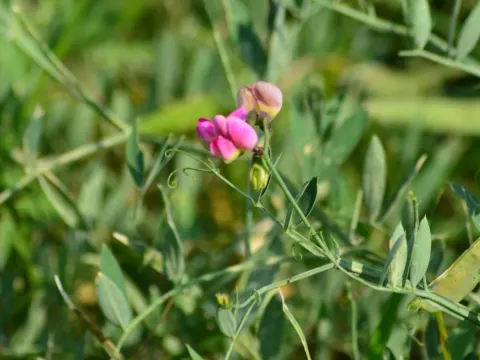
Cirrhose vetchling
Lathyrus cirrhosus
Sowing of Lathyrus cirrhosus is carried out in early spring, as soon as the soil reaches its physical maturity. The crop is known for its high cold resistance, allowing young seedlings to withstand occasional light frosts without significant damage to their tissues.
What the section contains
Cirrhose vetchling
The optimal planting depth ranges from 3 to 5 centimeters, depending on the soil's mechanical composition. It is crucial to ensure good contact between the seeds and the moist soil layer to achieve uniform and consistent emergence of seedlings.
The seeding rate is determined based on the thousand-seed weight and the desired plant density, typically around 1–1.2 million viable seeds per hectare. When growing the crop for green fodder, seeding rates may be slightly increased to suppress weeds.
Row spacing during seed production is usually 15–30 centimeters, which allows for effective mechanical weeding between rows. This practice improves air circulation within the canopy and reduces the risk of fungal diseases.
A vital element of the sowing process is the inoculation of seeds with nitrogen-fixing bacteria. This enhances photosynthesis and provides the plants with accessible nitrogen throughout the entire growing season.
As a member of the Fabaceae family, the Cirrhose vetchling prefers well-drained, fertile loamy and sandy loam soils. It demonstrates high tolerance to slightly acidic environments, although the optimal pH level is between 6.5 and 7.5.
The plant possesses a well-developed root system, making it moderately drought-tolerant during the active growth phase. However, sufficient moisture in the first half of the summer is required to form maximum vegetative biomass.
The crop is light-demanding and performs poorly under shaded conditions. It effectively utilizes sunlight to build its vegetative organs, which contributes to its high nutritional value for livestock feed.
The best predecessors for this crop include row crops, small grains, or clean fallows. It is recommended to observe a crop rotation interval of at least 3–4 years to prevent the buildup of soil-borne pathogens.
The application of phosphorus and potassium fertilizers significantly increases the yield of both green mass and seeds. Excessive nitrogen should be avoided to prevent plant lodging, especially since the plant uses tendrils to support itself.
The average yield of green mass ranges from 20 to 35 tons per hectare under favorable weather conditions. The yield depends directly on the level of agricultural management and timely mineral fertilization.
Seed yields typically reach 1.5–2.5 tons per hectare. To achieve stable yields, it is important to manage the flowering phase effectively, ensuring sufficient pollination by insects.
The nutritional value of the crop remains high until the stems begin to harden. Harvesting at the correct physiological stage ensures high-quality feed, rich in proteins that are easily digestible for farm animals.
When used as a green manure, the crop enriches the soil with significant amounts of organic nitrogen. This provides a long-term improvement in soil fertility for subsequent crops in the rotation.
Factors limiting yield include adverse weather conditions during the seed-filling phase, such as prolonged drought or extreme heat. In such cases, plants may prematurely transition into a dormant stage.
Common diseases of this crop include Ascochyta blight, which manifests as spots on leaves and stems. To prevent outbreaks, it is essential to follow crop rotation practices and use only high-quality, certified seed material.
Anthracnose and various root rots may affect the crops during periods of high humidity and waterlogged soil conditions. Fungicide seed treatment before planting is an effective preventative measure.
Among the pests, clover root curculio poses the greatest threat, as it damages the root system and aerial parts of the plants. Aphids can also cause significant damage by sucking sap from tender leaves.
The pea weevil (Bruchus) is a specific pest that damages seeds during maturation. Controlling this pest requires strict adherence to harvesting schedules and, if necessary, the application of insecticides.
Monitoring the fields during critical growth stages is essential for minimizing damage from pests and diseases. Utilizing resistant cultivars remains the most reliable strategy for protecting the crop harvest.
Harvesting for green fodder is performed during the mass flowering phase or at the beginning of pod formation, when the plant contains the highest concentration of nutrients. Delayed harvesting leads to a loss in feed quality due to tissue coarsening.
For seed production, harvesting begins when 70–80% of the pods on the plants have matured. It is important to avoid letting the pods dry out completely to prevent them from splitting and dropping seeds in the field.
To reduce losses during mechanical harvesting, a two-stage method is recommended, involving cutting the plants into swaths followed by threshing after they have dried. This ensures cleaner and drier grain with less mechanical damage.
The moisture content of seeds at the time of storage should not exceed 14–15% to maintain viability over long periods. Pre-cleaning from impurities and weed seeds is a mandatory step for long-term storage.
After harvesting, the field must be cleared of crop residues to prevent the spread of diseases. Deep plowing helps incorporate organic matter and destroys overwintering stages of various pests.