
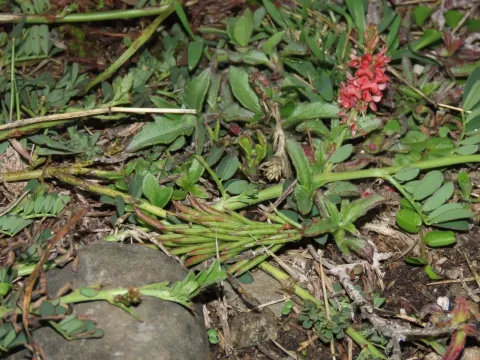
Indigofera spicata
Indigofera spicata
Indigofera spicata, commonly known as creeping indigo, is a hardy perennial legume belonging to the Fabaceae family. Originally native to tropical Africa, it has been widely introduced to various tropical regions globally for its robust growth and soil-enriching properties.
What the section contains
Indigofera spicata
The plant is highly valued for its ability to thrive in diverse soil types, ranging from sandy to heavy clay soils. It possesses a deep root system that helps in soil stabilization and structure improvement, making it a critical asset for conservation agriculture.
This crop requires significant sun exposure to achieve maximum photosynthetic efficiency. While it demonstrates resilience to temporary drought conditions, it performs best in regions with consistent rainfall or supplemental irrigation during the growing season.
Thermal requirements for Indigofera spicata are strictly tropical. It cannot survive frost and shows limited growth in cooler climates where average temperatures drop below 15 degrees Celsius. Growth is most vigorous under high-temperature conditions common in tropical zones.
Agrotechnical management involves surface soil cultivation before sowing. The seeds should be planted at a shallow depth to ensure successful germination. Due to its creeping habit, it establishes a dense ground cover that effectively suppresses competitive weed growth.
The primary agricultural use of Indigofera spicata is as a forage legume. It provides high-protein biomass that is essential for livestock nutrition, particularly in regions where other forage options might be seasonally scarce or nutrient-deficient.
In addition to its role as forage, it serves as an excellent cover crop in permanent plantations, such as those for tea, coffee, or rubber. It protects the soil surface from high tropical rainfall, reduces evaporation, and maintains soil organic matter levels through leaf litter.
The biomass yield is dependent on soil fertility and moisture availability. In optimal conditions, it allows for multiple harvests per year. Farmers typically harvest when the plant reaches the peak of its vegetative growth, just before full pod maturity.
As a nitrogen-fixing legume, the plant significantly contributes to the soil nitrogen balance. This helps reduce the need for synthetic nitrogen fertilizers in subsequent crops when practiced within a well-planned crop rotation system.
Seed harvesting requires careful timing, as the pods tend to shatter upon reaching full maturity. Mechanized or manual collection should be performed when the majority of the pods have turned dark but have not yet fully burst.
The plant can be susceptible to various leaf-feeding insects, including beetles and certain larvae. In severe cases, these pests can cause significant defoliation, which reduces the photosynthetic capacity of the stand.
Fungal diseases like anthracnose are common in this species, especially during prolonged rainy seasons. High relative humidity and poor air circulation within the canopy create an ideal environment for the spread of these pathogens.
Effective management includes maintaining appropriate planting density to allow airflow and utilizing pest-resistant germplasm where available. Preventive measures, such as field sanitation, are crucial for long-term health.
Root-knot nematodes can pose a risk to the root system, potentially causing stunted growth and lower nutrient uptake. Crop rotation with non-leguminous plants is recommended to break the lifecycle of soil-borne pests.
While the plant is generally aggressive against weeds, during the seedling establishment phase, weeds can become a major threat. Early-stage weed control is vital to ensure the crop gains a competitive advantage over invasive species.